Urethral stricture is the narrowing of the urethra due to scar tissue formation in or around this thin tube. It’s treatable. However, it can recur. Common treatment options include dilation, urethrotomy, and urethroplasty.
Is Urethral Stricture Curable Permanently? Treatment Options Explained
The urethra is a thin tube responsible for expelling urine from the bladder out of your body. Typically, it’s wide enough for urine to pass easily, but scar tissue in or around the urethra can partially block it or narrow the tube, weakening the urinary stream.
The condition is more common in men as they have longer urethras, but women can develop it too. Scar tissue can develop due to infection, inflammation, injuries, prolonged use of a catheter, or a surgical history. In this post, we’ve discussed effective urethral stricture treatment in Navi Mumbai and whether there’s a permanent cure.
Is Urethral Stricture Curable?
Yes, urethral stricture is treatable and can even be cured permanently. However, the success rate of the treatment depends on multiple factors, such as how much scar tissue has developed in the urethra, whether it’s occurred before, stricture length, and your overall health.
Certain treatments provide temporary relief but carry a risk of recurrence. Other advanced procedures, such as reconstructive surgery, may offer long-lasting results.
The most common reason why scar tissue could regenerate after treatment is the treatment itself. There’s a high recurrence risk if the tissue is only cut or stretched. Constructive treatment or sometimes a less-invasive procedure may be enough for a small stricture, while larger ones may require reconstructive surgery.
Treatment for Urethral Stricture
A urologist in Navi Mumbai will evaluate the length and severity of the stricture to decide on the most reliable treatment plan for you. Here are some effective treatment options.
Urethral Dilation
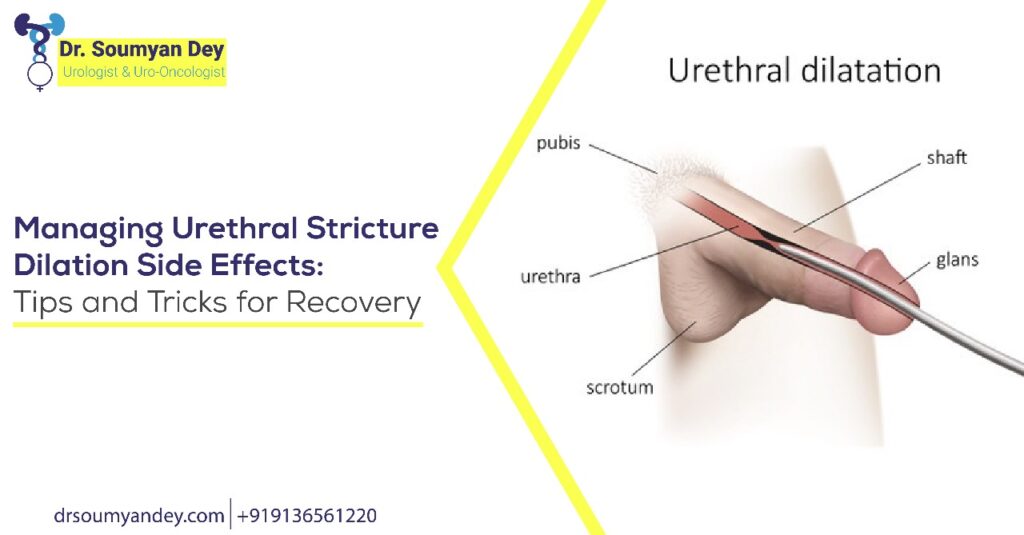
The simplest and one of the least invasive treatments for urethral stricture is dilation. The procedure involves specialized medical equipment that widens the narrowed parts of the urethra, thus fixing blocked or restricted urinary flow. It’s performed as an outpatient procedure, and you can expect to return home and get back to your routine fast.
But, since it doesn’t remove the scar tissue, it may not be effective for all urethral strictures. If you have extensive scar tissue or a history of recurring urethral strictures, there’s a chance this treatment may not offer a permanent cure.
Internal Urethrotomy
This is another less-invasive treatment for urethral strictures. Internal Urethrotomy involves a cystoscope, a small instrument with a knife attached to its end, which is guided through the urethra to cut the scar tissue.
It offers almost immediate relief from symptoms. That said, this may not be a permanent solution for recurrent urethral strictures. The scar tissue can reform, blocking the urine again.
Urethroplasty
A relatively more invasive yet highly effective treatment for urethral stricture is urethral reconstruction or repair surgery. Urethroplasty involves repairing or rebuilding the narrowed section of the urethra by removing the scar tissue entirely or widening it.
In some cases, a urologist may reconstruct the narrowed parts using skin tissue from other parts of your body, mostly the cheeks. When performed by an experienced surgeon, the risk of stricture recurrence after urethroplasty is low.