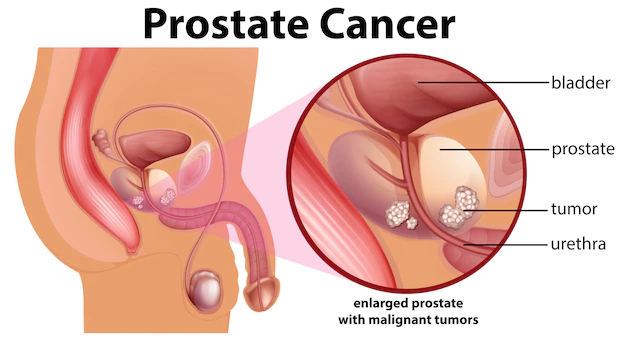
Treatment for prostate cancer includes active surveillance, surgery, chemotherapy, radiation therapy, targeted therapy, and, in some selected cases, immunotherapy.
Which Prostate Cancer Treatment Is Best?
Prostate cancer in men starts in the prostate, a walnut-shaped gland, sitting below the bladder and surrounding the urethra. When a urologist in Navi Mumbai discovers abnormal cell growth in the prostate, they don’t straight away recommend surgery. In fact, many patients with prostate cancer are advised to undergo active surveillance for slow-growing tumors.
Others, however, may need a combination of treatments, including surgery, chemotherapy, radiation therapy, hormone therapy, and more. Here’s a detailed look at the different prostate cancer treatment options.
Watchful Waiting or Active Surveillance
Some prostate cancers grow so slowly that they may never spread or become aggressive enough to require treatment. If the cancer is localized and is less likely to be aggressive, watchful waiting is all that may be needed.
This is done through regular follow-ups, digital rectal exams, PSA blood tests, MRIs, and other diagnostic procedures that can give detailed information about the cancer stage or its growth status. The biggest perk is that you won’t face treatment-related side effects, such as erectile dysfunction or urinary incontinence.
Surgery (Radical Prostatectomy)
If the cancer is growing, surgery to remove the entire prostate gland along with the seminal vesicles and lymph nodes might be recommended. The surgical extent depends on how far the cancer has spread.
Robot-assisted radical prostatectomy has become a standard prostate cancer treatment in Navi Mumbai. The procedure allows greater precision, comparatively lesser blood loss than open surgery, and faster recovery. The biggest downsides are the risk of permanent erectile dysfunction or urinary leakage issues.
Radiotherapy
Radiotherapy uses high-energy beams to destroy cancer cells. It can be used as a standalone therapy for early-stage cancers or after surgery to kill the remaining cancer cells. Recent advancements in radiation therapy allow uro-oncologists to concentrate the radiation within your prostate, thus preserving healthy nearby tissues.
In many cases, radiation therapy eliminates the need for prostate surgery. However, it can lead to side effects, such as fatigue, urinary incontinence, bowel irritation, and changes in sexual function.
Chemotherapy
Chemotherapy is used for patients with advanced-stage prostate cancer, which has spread outside the prostate. The therapy kills fast-growing, aggressive cancer cells throughout the body.
It can be used as a primary treatment or combined with hormone therapy, depending on the cancer stage and your health. Chemo drugs are administered through intravenous infusions at specific schedules, allowing your body time to heal between cycles.
The biggest concern with chemotherapy for prostate cancer is that it doesn’t spare fast-growing healthy cells. This causes a range of side effects, such as nausea, mouth ulcers, fatigue, low blood cell counts, and hair loss.
Additional Treatment Options
Targeted therapy is a more advanced approach that may work for men whose prostate cancer has inherited (germline) or acquired (somatic) mutations in BRCA1, BRCA2, or certain other DNA repair genes.
The therapy targets changes in cancer cells, thus targeting only the aggressive cells while leaving healthy cells untouched. Immunotherapy is another possible treatment, but its use is limited in prostate cancer patients.
There’s no single best treatment for prostate cancer. The most reliable treatment option for your case depends on whether the cancer is localized, growing fast, your age, health, and other factors.