Dr.Dey

Kidney Stone

When Is RIRS Recommended Over Other Procedures

When Is RIRS Recommended Over Other Procedures?

Retrograde Intrarenal Surgery, short for RIRS, is a low-risk, minimally invasive surgery for kidney stones. There are no cuts or stitches. The best urologist in Vashi, Navi Mumbai, uses an endoscope, a special thin instrument for the procedure.  The endoscope passes through your urinary tract, i.e., your urethra and the bladder, to reach your kidney. The urologist uses laser energy to break stones. It’s an ideal medical treatment for patients whose bodies can’t handle an invasive, open surgery. Indications for RIRS RIRS is recommended when you have: Smaller Stones: If you have a small kidney stone, less than 2 cm in size, you may be a good candidate for RIRS. That said, the procedure is also used if the stones are larger and have not responded to extracorporeal shock wave lithotripsy.  Hard-to-Reach Areas: Stones located in locations that are difficult to access through other procedures can be broken down into small fragments with an endoscope. The tool offers excellent flexibility and manoeuvrability, allowing your surgeon to access the stone and remove it easily. Patients Not Fit for Invasive Surgery: Elderly patients and others with a compromised immune system or medical issues, such as bleeding disorders or obesity, might want to consider this least invasive and safest approach for kidney stone removal. Procedure Details Here’s the step-by-step guide for RIRS: Step 1: You will be sedated throughout the surgery to ensure a completely painless procedure Step 2: An optic endoscope is inserted into the urethra and bladder. It’s then moved up toward the affected kidney. Step 3: Once the endoscope reaches its destination, the camera attached to its end is used to visualize stones. Step 4: The surgeon uses a laser to break the stone. Once it’s broken down, it can pass naturally over days or weeks. Step 5: A stent may or may not be placed (temporarily) to allow urine drainage. Advantages of RIRS Here are the reasons why RIRS surgery in Vashi, Navi Mumbai, is often a preferred choice of treatment for kidney stone removal. No Severe Trauma: RIRS is a minimally invasive surgery with no incisions or sutures. There’s no trauma to the blood vessels or nerves, making it safer and less painful than other surgical approaches. Shorter Hospital Stay: You can expect a discharge within 24 hours if your vitals are stable. Quick Recovery: You can resume your normal life within a few days to a week after RIRS. Less post-operative pain with no scars makes recovery easier and quicker compared to an open surgery. Post-operative Care It’s normal to have some discomfort in the abdomen or back after RIRS. Urinary symptoms, like blood in the urine and frequent trips to the restroom, are also common side effects of the treatment, but they usually resolve in a week. Your surgeon will prescribe painkillers and other over-the-counter medications to relieve pain and other symptoms.  Urinary urgency is especially common in patients who have a stent placed. This will be removed in 1-2 weeks. It’s advisable to drink enough water to ensure the smooth passing of the remaining fragments (if any) of the stone naturally. You must also avoid heavy lifting, physically demanding exercises, and sexual intercourse for a few weeks.

Single-Incision Laparoscopic

Is Single-Incision Laparoscopic Kidney Removal a Safer and Less Painful Procedure?

Laparoscopic surgery has evolved. This minimally invasive approach has been chosen by most patients who are advised to undergo a kidney removal surgery in Vashi, Navi Mumbai. The minimal scarring, less post-operative pain, and fewer incisions are some key benefits of the approach.  A recent advancement in the technique is the single-incision laparoscopy for nephrectomy. Instead of making multiple incisions on your abdomen, the surgeon creates only a single small incision around the belly button, making the surgery safer, less painful, and easier on your body. Here’s all you should know about it. When is Single-Incision Laparoscopic Kidney Removal Recommended? Here’s when single-incision laparoscopic kidney removal is needed. Kidney Cancer: Surgery is needed if you are diagnosed with kidney cancer. The exact treatment plan depends on how fast the cancer spreads or the level of damage it has caused. If it’s an initial-stage cancer, the entire kidney might be removed with laparoscopic surgery to reduce the risk of the cancer spreading. Non-functioning Kidney: If one of your kidneys doesn’t function optimally, is infected, or has congenital defects, removing it with nephrectomy surgery can be an ideal decision.  Donor Nephrectomy: People who donate their kidneys can also undergo single-incision nephrectomy to ensure better post-operative outcomes, lesser pain, and no major scars.  What are the Benefits A urologist in Vashi, Navi Mumbai, can remove your kidney through SILS. You might wonder how it is different from open surgery or typical multiple-incision laparoscopic nephrectomy. Here is how it’s a better alternative to other nephrectomy procedures: Minimal Scarring: The biggest advantage of SILS is minimal scarring. The incision length is 2-4 cm and is either in the navel or close to it. If you are concerned about a 10-12 cm long scar from an open surgery or multiple small scars in a laparoscopic procedure, this could be your best option.  Reduced Pain: A single, small scar means less post-operative pain. Your surgeon doesn’t have to make big cuts on the muscles and tissues, which reduces the pain levels significantly. As a result, you don’t have to take stronger pain medications. This also means you can walk, move, laugh, and transition to your pre-surgery life quickly. Quicker Recovery: You can also resume your routine tasks sooner and get back to work faster compared to the longer recovery periods of traditional open surgery. You can expect a discharge in 1-2 days and can perform light activities in a week (if your doctor clears you for it). Full recovery can be expected in 4-6 weeks. Reduced Risk of Complications: In SILS, there’s only one entry point. Fewer incisions mean a lower risk of infection, bleeding, or hernias. Besides, a single incision makes wound care easier for the patient.SILS is a modern, innovative surgical approach for nephrectomy. It’s ideal for people donating their kidneys or needing to detach them due to medical reasons. The success rate of the procedure depends on many factors, such as the surgeon’s expertise and your health, but overall, it’s a highly preferred and smart alternative to traditional nephrectomy procedures.

What are the First Signs of Kidney Stones?

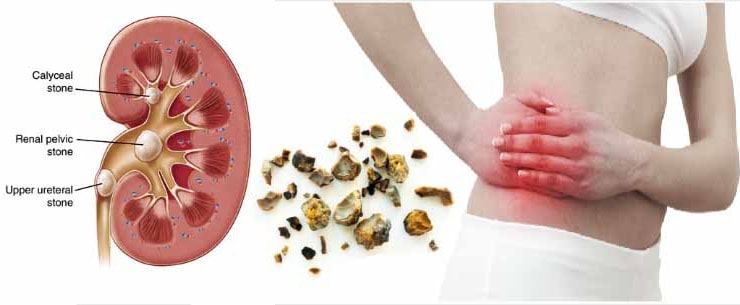
Kidney stones are hard deposits of minerals and salt. Concentrated urine creates an ideal environment for the minerals to turn into crystals, which may stick together and form stones. Kidney stones do not cause symptoms until they enter the ureters (the tubes connecting kidneys to the bladder) and get stuck there. This can block urine flow. See a kidney stone specialist in Navi Mumbai if you experience the symptoms mentioned below. Common Symptoms of Kidney Stones When to Seek Medical Attention Most small stones do not require an invasive treatment. They might pass on their own through urine, although larger ones that cause excruciating pain and fever might need immediate kidney stone treatment in Navi Mumbai. Here’s what’s considered a medical emergency: Preventative Measures and Lifestyle Changes If you are at risk of kidney stones or have had one before and are worried about developing another, here are a few preventive measures you can follow to minimize your risk: Get Kidney Stones treatment as soon as you can Kidney stones require treatment if they cause pain and other symptoms. The sooner you get treatment, the fewer the risks of complications. Head to the nearest urology center to get checked and treated.

how to remove stone from ureter

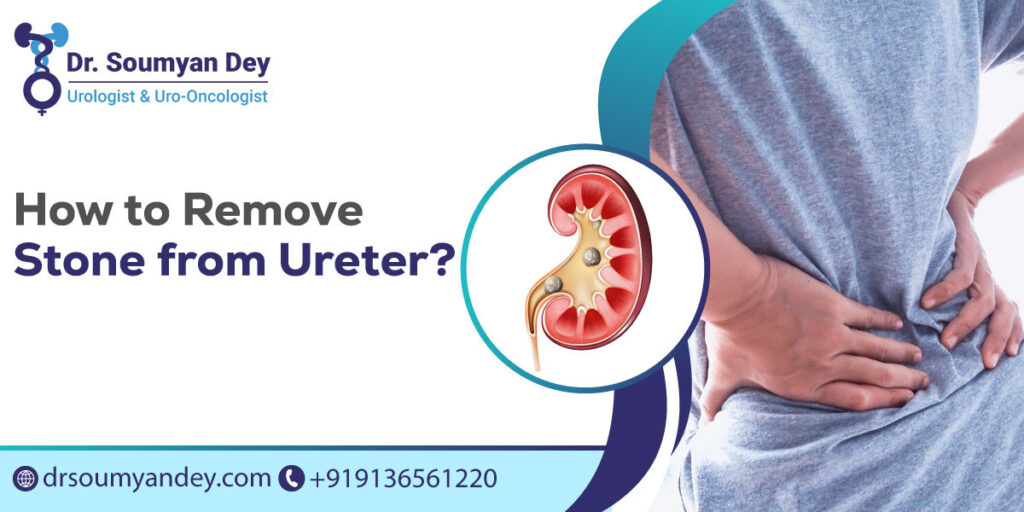
How to Remove Stone from Ureter?

I. Introduction A ureter stone is a crystallize fragment that develops inside the ureter. Dr. Soumyan Dey treats people with ureter stones. The occurrence of these transparent stones can lead to severe discomfort and restlessness. The normal symptoms of ureter stones comprise strong back or abdominal pain, nausea and occasionally blood in the urine. II. Diagnosis The diagnosis for ureter stones consists of several diagnosis tests, physical examination, and some imaging tests like X-rays, CT scans and ultrasounds used to foresee the stone’s size and location. In some cases urine tests may be taken to see the signs for infections or blood in urine that can also be due to ureter stone. III. Treatment Options There are two ways to treat ureter stones: 1. Non-Surgical Interventions: The size of their ureter stones is small, and they are most expected to be treated on their own. Hence, non-surgical treatment is suggested for individuals who do not have a grave condition. This suggests the use of medications like NSAIDs and alpha blockers to ease the ureter muscles and the stone passage to go through. Drinking water in great amounts can help in blooming out the minor stones.  2. Surgical Procedures: Surgical involvements are essential, and it is a must if the size of the ureter stone is big, as it leads to solid pain and other difficulties like urinary region infections or kidney damage. Ureteric Stone Removal Surgeon in Navi Mumbai offers people a good and painless surgery. Also Read: What Size Of Kidney Stone Requires Surgery? The surgical interventions typically include two procedures: a) Ureteroscopy: Under this procedure, a thin, flexible scope is injected into the ureter to picture and eradicate the stone using special equipment directly. b) Lithotripsy: This involves the use of shock waves to break down the stone into tiny remains to make it easier to pass or remove from the body by using different means. IV. Recovery and Prevention Post-treatment Care and Potential Complications It is recommended that the patient follow the guidelines and instructions after the ureter stone removal, which include the following: Tips for Preventing Future Ureter Stone Formation V. Conclusion Ureter stones can lead to a lot of uneasiness and pain, but they can be treated with the right treatment. Consult Dr. Soumyan Dey for queries or treatment for ureter stones. Nevertheless, make a habit of drinking more water and eating a balanced diet. Doing these will reduce the chances of ureter stones to a great extent.

Side Effects After PCNL Surgery

Side Effects After PCNL Surgery

1. Introduction PCNL or Percutaneous Nephrolithotomy surgery is a minimally invasive procedure used to remove kidney stones. In Navi Mumbai, Dr. Soumyan Dey specializes in this surgery, providing advanced treatment for kidney stone patients. While PCNL Surgery in Navi Mumbai is generally safe and effective, it can be associated with certain side effects and potential complications. Understanding these aspects is crucial for patients undergoing this procedure. 2. Understanding PCNL Surgery PCNL involves creating a small incision in your back and using a nephroscope (a thin viewing instrument) to directly access and remove kidney stones. It\’s a viable option for larger or inaccessible stones through other methods. 3. Common Side Effects of PCNL Surgery While generally safe, PCNL surgery can lead to certain side effects: a) Pain and Discomfort: You may experience flank pain radiating from your back to your lower abdomen. It is typically managed with prescribed pain medication, but over-the-counter options might be needed later. Burning sensation during urination is common due to irritation and swelling. Drinking plenty of fluids and pain medication can help alleviate this. b) Bleeding and Blood Loss: Minor bleeding from the incision or in your urine is normal for the first 24-48 hours. The urine might appear pink or reddish but should gradually clear. However, excessive bleeding (bright red, large clots) requires immediate medical attention. Notify your Doctor for Kidney Stone Treatment in Navi Mumbai promptly to prevent complications. c) Infection: Antibiotic prophylaxis is typically administered before and after surgery to minimize the risk of infection. However, there\’s still a small chance of developing an infection, especially if you experience: d. Urinary Retention: Temporary difficulty passing urine is a common postoperative occurrence due to swelling or blood clots in the urinary tract. It usually resolves within a few days. Also Read: What Size Of Kidney Stone Requires Surgery? 4. Potential Complications After PCNL Surgery Though uncommon, certain complications can arise: i) Urinary Tract Infections: Despite preventive measures, urinary tract infections can occur post-surgery. Prompt treatment with antibiotics is essential to prevent complications. ii) Kidney Stones: Recurrence of kidney stones is possible even after successful removal through PCNL surgery. Patients are advised to follow dietary and lifestyle modifications to reduce the risk. iii) Injury to Surrounding Organs or Tissues: Rarely, PCNL surgery may result in injury to nearby organs or tissues, leading to complications that require further intervention. 5. Managing Side Effects After PCNL Surgery While managing side effects after PCNL, remember: A) Pain Management: Prescribed pain medication helps manage initial discomfort. Ice packs applied over the incision site provide localized relief. B) Preventing Infection: Meticulous hygiene around the incision site is crucial. Drink ample fluids to flush out bacteria and toxins. C) Treatment for Urinary Retention Address urinary retention promptly with catheterization if needed. It ensures proper bladder emptying until normal urinary function resumes. 6. Conclusion Understanding the potential side effects of PCNL surgery empowers you to make informed decisions and manage your recovery effectively. Consulting a qualified urologist like Dr. Soumyan Dey in Navi Mumbai ensures you receive the best care and guidance throughout your treatment journey.

The Benefits of a Stent for Kidney Stone Treatment

The Benefits of a Stent for Kidney Stone Treatment

Kidney stones can be an excruciating experience, causing intense pain and discomfort. In kidney stone treatment, one significant tool that urologists often deploy is a stent. This article will explore a stent, its advantages in kidney stone treatment, the stent insertion procedure, potential risks, recovery processes, and the importance of aftercare. 1. What is a Stent and Why is it Used for Kidney Stone Treatment? A stent is a slender, flexible tube typically made of medical-grade plastic or metal mesh. In the context of kidney stone treatment, a ureteral stent is employed. This stent is inserted into the ureter, the tube that connects the kidney to the bladder. Dr. Soumyan Dey, a distinguished Ureteral Stent Placement Surgeon in Navi Mumbai, often recommends this procedure for kidney stone treatment. 2. What are the Advantages of Using a Stent for Kidney Stone Treatment? 3. How is the Stent Insertion Procedure Done? A skilled urologist typically performs the procedure for inserting a ureteral stent. During the procedure: Also Read: What Size Of Kidney Stone Requires Surgery? 4. Potential Risks and Complications Associated with a Stent While stents are generally safe, some potential risks and complications may include: 5. Recovery Process and Guidelines for Aftercare Following stent insertion: i) Activity Restrictions: Patients may be advised to limit physical activities briefly. ii) Hydration: Staying well-hydrated is crucial to prevent complications and promote healing. iii) Medication: Prescribed medications may be given to manage pain or prevent infection. iv) Follow-up: Regular follow-up appointments with the urologist are essential to monitor progress. 6. Conclusion Using a stent under the expertise of professionals like Dr. Soumyan Dey offers significant advantages in kidney stone treatment. The benefits are substantial, from pain relief to facilitating healing and preventing complications. While the procedure involves risks, proper aftercare and monitoring contribute to a successful recovery. For those navigating the challenges of kidney stones, including a stent can be crucial in the journey toward renewed urinary health. If you seek reliable Ureteral Stent Placement and Kidney Stone Treatment in Navi Mumbai, consulting with experts like Dr. Soumyan Dey is a prudent step toward comprehensive care and effective resolution.

What Size Of Kidney Stone Requires Surgery

What Size Of Kidney Stone Requires Surgery?

Kidney stone is one of the common issues that can occur in anyone regardless of gender or age. Calculus in the kidney is one of the most unbearable pain in the world. Sometimes, patients may need surgery to remove the stone from the kidney according to the size of the stone. However, it would be best to consult with Dr. Soumyan Dey if you want the best kidney stone treatment in Navi Mumbai. What is a Kidney Stone? Kidney stone is a common issue that may occur due to the excess minerals present in the body. Not taking enough water increases the amount of minerals like calcium, uric acid, and oxalate in the kidney and forms calculus or stone. It is a hard crystalline deposit, which can lead to various symptoms and complications. Kidney stones may be found in different colors, shapes, and sizes, ranging from a grain of salt size to a corn. Kidney stone is a very debilitating and painful condition, but sometimes small stones naturally pass through urination with the help of treatment. However, large stones can get stuck in the ureter and block the passage of urine, which causes bleeding and other complications. What Causes Kidney Stones? The development of kidney stones mainly occurs due to the high level of minerals in the urine. However, some of the possible causes of kidney stones are: Also Read: Natural Remedies for Kidney Stones: Here’s What May Help What are the Symptoms of Kidney Stones? Kidney stones can quickly form without any early signs and symptoms. However, people with kidney stones are most likely to suffer from the following symptoms: What Size of Kidney Stone Requires Surgery? Small kidney stones are painful, yet these can quickly be passed through urine with proper treatment. But large stones up to 5 millimeters are less likely to excrete from the body naturally. Thus, the best urologist may suggest a surgical procedure if kidney stones are larger than 5 millimeters. However, some small kidney stones also need surgery if they are stuck in the ureter and block the way of urine. What is the Treatment for Kidney Stones? If the size of the stone is small, then the doctor may suggest the best medication and conservative treatment so the stone can get out of the body. On the other hand, if the size and condition of kidney stones are complicated to pass from the body naturally, then the doctor may suggest surgical treatment. However, if you\’re looking for the best kidney stone specialist in Navi Mumbai, you can consult with Dr Soumyan Dey, who offers the best treatment plan for the patient\’s symptoms, conditions, and overall health. Conclusion Kidney stone is a very painful issue that can vary according to size. This condition may get worse if one leaves it untreated. However, getting the best consultation and quick treatment would be best to eliminate the need for surgery.

What to Expect After RIRS Surgery_ Common Side Effects and Recovery Tips

What to Expect After RIRS Surgery: Common Side Effects and Recovery Tips?

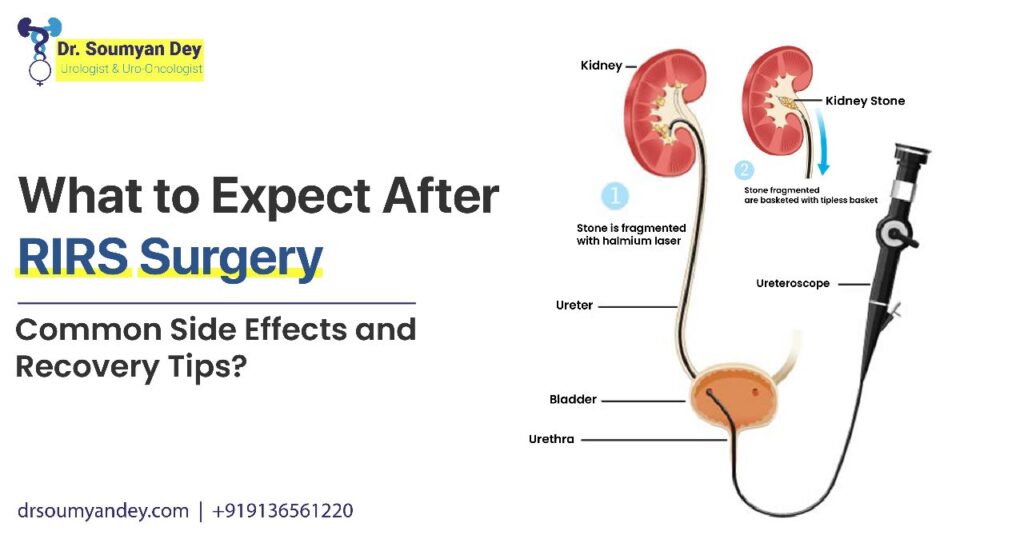
Retrograde Intrarenal Surgery or RIRS is a minimally invasive kidney stone removal procedure, in which a viewing tube, called a fiberoptic endoscope, is inserted into the ureter through the urethra. This tool is flexible enough to be bent and moved, allowing the RIRS surgery doctor in Navi Mumbai to move it into the ureter effortlessly. It’s a better and comparatively less invasive procedure than traditional kidney stone removal surgery. Keep reading to learn more about RIRS, when it’s performed, and some recovery tips. What is RIRS Surgery? RIRS is recommended for patients with kidney stones ranging from 10mm to 14mm in size. For those who experience recurring kidney stones or have huge stones that are too big to be removed with oral medication, the RIRS is an excellent choice. The endoscope gives a clear view of the urine-collection portion of the kidney and the number, as well as, the size of stones in it. The kidney stones are broken into tiny particles using the laser fiber, which is inserted into the ureter through the scope. Once done, these broken stone particles will be then removed through urine. The minimal risk of complications with no scarring and faster recovery make RIRS a suitable choice for those who don’t want to undergo traditional surgery. Since there’s no bleeding or the risk of harm to the surrounding organs, the recovery time for RIRS is relatively faster than the invasive kidney stone surgery. That said, it comes with a few risks you should discuss with your doctor. Also Read: Is Summer the Kidney Stone Season? Common Side Effects of RIRS Surgery RIRS doesn’t involve any incision, but the stent implantation through the urethra can cause mild discomfort post-procedure. Initially, you won’t feel anything due to the effect of local anesthesia, but once it wears off, you might experience pain or discomfort. To avoid pain while urinating, your healthcare provider will put a catheter, which is left for 24 hours. The side effects of RIRS surgery are less common and are seen in very few people after the operation. Here are a few of them: If you notice these symptoms post-surgery, visit the urology hospital in Navi Mumbai immediately. Tips for Recovering from RIRS Surgery You will be put in the monitoring room for the first few hours. Once the catheter is removed, you will get a discharge. You might notice blood in the urine and discomfort while sitting or walking. Avoid practicing any strenuous physical activity for the first few days and drink plenty of fluids. Eat a healthy and nutritious diet and avoid caffeinated beverages until you recover fully. Your doctor will prescribe antibiotics and painkillers to ease your symptoms. Conclusion Kidney stones that do not respond to lithotripsy and other non-invasive procedures might require an RIRS surgery, a minimally-invasive procedure, that removes the stones by breaking them into smaller pieces. These are then removed through urine. Complications from the procedure are less common, but it’s advisable to watch out for the signs of any unusual symptoms.

Natural Remedies for Kidney Stones

Natural Remedies for Kidney Stones: Here’s What May Help Kidney stones are very painful. If you have one or a bunch of these, you might experience unusual lower back pain. It is extreme, to say the least. The worst part is people who have kidney stones removed either through oral medical, or invasive procedures are likely to get them back after some time. Kidney stones need treatment based on their size and quantity. But a few natural home remedies can help speed up your recovery. Here are some tips that might help.   Stay Hydrated People with kidney stones need to drink enough fluids to stay hydrated throughout the day. Water is associated with a lower risk of kidney stone formation. Certain beverages, like orange juice, tea, and coffee, show the same effects.  You should avoid sodas, cold drinks, and any artificial-sweetened drinks. They release uric acid and calcium oxalate, and both increase the risk of crystal formation in your kidneys. You should drink up to 3.6 liters of water daily to produce clear urine. Tip: While some fluids are healthy for your kidney health, others might increase the risk of kidney stones. So, check with a urologist before drinking.   Limit Foods Rich in Oxalates Our bodies produce a considerable amount of oxalic acid. It’s also found in large amounts in green leafy vegetables, cocoa, and certain fruits. Although oxalates aren’t harmful, they can be problematic for people with kidney stones.  Excess amounts of oxalate can bind different minerals, forming small crystals, which eventually become kidney stones. Limit the intake of foods containing high levels of oxalic acid, but ask your doctor first. That’s because oxalate-rich foods are important for your overall health, and its deficiency in your body can cause other problems.  Avoid Salt A diet rich in salt also increases your risk of kidney stones. As you increase your sodium intake, the calcium might excrete through urine. This can form kidney stones. Your urologist will recommend an ideal amount of sodium intake for a day, but ideally, you should limit it to 2,300 mg. Unfortunately, most people eat more salt than the recommended levels. To keep your sodium levels in check, avoid packaged and processed foods. Eat Magnesium-Rich Foods Although more research is needed, it is believed that magnesium reduces the risk of crystal formation or calcium excretion through urine. Experts recommend 420 mg of magnesium in your diet a day. If your diet doesn’t provide a sufficient amount of magnesium, try tofu, avocados, and legumes. They are excellent sources of diet-based magnesium. Kidney stones consist of solid waste materials that accumulate in your kidneys and turn into solid crystals. These crystals can block the urine flow, causing your kidneys to swell and cause pain. You need to see a urologist in Mumbai immediately if you notice a sharp pain in the lower back and abdomen, blood in the urine, cloudy urine, and other symptoms. Blood tests and urine tests will help your urologist detect kidney stones. For a more clear diagnosis, they might order an ultrasound or CT scan.

Is Summer the Kidney Stone Season?

Is Summer the Kidney Stone Season? Here’s All You Need to Know With summer around the corner, people are planning vacations. Summer is all about beaches, mountains, and hill stations. However, the case is quite different for the doctors. With summer arriving, urologists start preparing for patients with kidney stones. It leaves people wondering how kidney stone is associated with warm weather.  There is no denying that kidney stones are linked to the hot season. This period seems to be getting longer, as global warming is increasing drastically. The climate change and rising temperature lead to dehydration, which worsens in summer. Sadly, the growing pollution level and the increasing carbon emissions have led to climate change.  While there is a connection between kidney stones and summer, it is not the only reason. Dehydration, for example, has been linked to a higher risk of kidney stones. But, the rising temperature is believed to increase the number of kidney stone patients. According to the National Kidney Foundation, around a half-million patients in America are admitted to hospital emergency units annually to treat kidney stones. This figure keeps increasing. Not only in the US, but we have seen a growing number of patients diagnosed with kidney stones in Europe and nearly all nations. In addition to adults, children are also prone to developing kidney stones. Formation of Kidney Stones Kidney stones are formed when the substances in your urine start to form solid crystals that circulate in your urinary tract. These crystal-like substances can block the way for your urine, which might make them painful. Kidney stones are solidly mass-produced of small pieces. There can be one or several stones found in your kidney. These stones are made up of calcium, phosphorus, and other chemicals.  Low urine volume is caused by dehydration. Concentrated urine occurs due to the low urine volume. It reduces your kidney’s ability to dissolve salts and other chemicals in the urine, increasing the risk of kidney stones. People who don’t drink enough fluids or live in places with hotter climates tend to suffer from dehydration. Practising strenuous physical exercises might also cause dehydration. The common sign of low urine volume and dehydration is dark urine. Obesity is another risk factor. Obese people report a fluctuation in the acid level, which eventually results in the formation of stones.  You must drink enough fluids, especially if you experience warm weather throughout the year. Your diet also matters a lot when it comes to urinary health. People diagnosed with stones or urinary tract infections are asked to avoid protein-rich diets. You should avoid eating beef, pork and meat. That’s because these foods produce uric acid that forms kidney stones. Certain medicines, especially ones with a high vitamin C, make you highly vulnerable to Kidney stones. Other than that, kidney stones can be formed due to genetic disorders. What Can You Do to Prevent Kidney Stones? Drink more fluids. That’s the first and more important step in preventing kidney stones. You should drink at least 8-10 glasses of water a day and more if you live in a tropical and subtropical climate.  2. Add more citric acid to your diet. You can drink lemonade or plain lime water in the morning to get extra citric acid. Certain foods, like chocolate, tea, nuts, and beets, are not healthy for your kidneys, especially for people with kidney stones. Calcium and phosphate should be avoided. Limit your salt intake. Avoid soft drinks.  3. Kidney stones need immediate treatment. Tiny stones can pass through your urine. But if these stones are left untreated, they might grow into large pieces. Make sure you drink plenty of fluids this summer and pay special attention to your diet. If you experience pain or notice any sign of kidney stones, visit a nearest best Oncologist  immediately. 

Scroll to Top