Prostate cancer has one of the highest 5-year survival rates, but the exact treatment outcome or survival depends on your age, stage, aggressiveness of the cancer, and how soon you get treatment.
Is Prostate Cancer Curable? Stages, Survival & When to Start Treatment
The word “prostate cancer” might raise fear. It’s natural to think of the worst-case scenario, such as “I am not going to survive this”. The reality, however, is much more hopeful than you think. Modern prostate cancer treatment in Navi Mumbai is highly personalized.
Prostate cancer prognosis varies depending on your age, health, stage of cancer, its aggressiveness, and, not to mention, how soon you seek treatment. Modern medicines and treatment approaches have made prostate cancer not just treatable but also curable.
Can Prostate Cancer Be Cured?
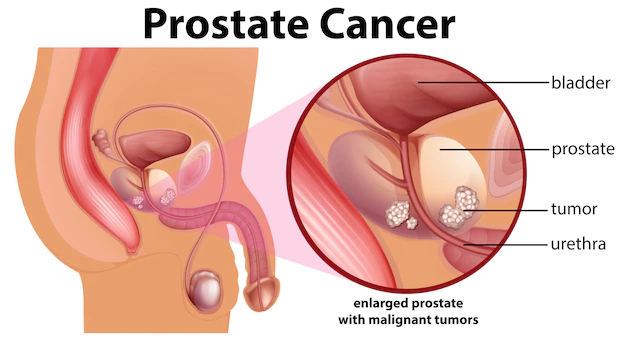
Prostate cancer occurs when the cells in this walnut-shaped gland start to grow uncontrollably. However, it doesn’t behave in the same way for all patients.
Some are diagnosed with aggressive prostate cancer, which spreads rapidly and is likely to move beyond the prostate, into distant organs, while non-aggressive types or slow-growing tumors might remain inside the prostate only.
So, yes, most cases of prostate cancer, which are detected early, have an excellent outcome. A uro-oncologist in Navi Mumbai might plan a treatment that can destroy cancer confined to the prostate. Even if the cancer cells spread outside the prostate, it’s possible to eliminate them.
Stages of Prostate Cancer
Prostate cancer is classified into several stages. This allows your oncologist to decide on the most appropriate treatment for your case.
Stage 1
Cancer remains localized and is usually small. Many men diagnosed with stage 1 prostate cancer discover it accidentally during routine PSA tests, prostate tests, or during surgery.
At this stage, treatment offers the highest survival rates. In some cases, the doctor may recommend close monitoring through MRIs, prostate tests, PSAs, and Gleason scores. Treatment may be advised only if the cancer shows signs of progression.
Stage 2
The cancer may still remain within the prostate gland, but can be comparatively larger than the stage 1 tumor. Some men start noticing a weak urine stream or frequent urination, but many might remain asymptomatic.
A higher PSA level and Gleason score might seem concerning at this stage, but long-term survival chances are quite good if treatment starts quickly and is personalized to your case.
Stage 3
The cancer starts spreading outside the prostate gland at this stage. The cells might invade the seminal vesicles and other surrounding tissues. Still, the chances of a successful treatment are good. Doctors may use a combination of treatments, such as radiation therapy, hormone therapy, and surgery, for stage 3 prostate cancer.
Stage 4
This is the most advanced stage. The cancer spreads outside the prostate and to distant parts, including your bones, lymph nodes, and sometimes, your lungs or liver.
Treatment may be more complicated, but modern approaches are quite effective in improving your quality of life, slowing tumors’ growth, and extending life. For advanced diseases, immunotherapy, chemotherapy, targeted therapy, and radiation therapy may be recommended in addition to surgery for the best outcome.
Survival Rate for Prostate Cancer
Prostate cancer has an excellent survival rate, in fact, one of the highest among different types of cancers. According to the American Cancer Society, the 5-year survival rate for localized, stage 1 cancer is greater than 99 percent.
However, the number drops drastically to 38 percent for prostate cancer that has spread to distant organs. Each case varies. And the exact survival rate may depend on many other factors.