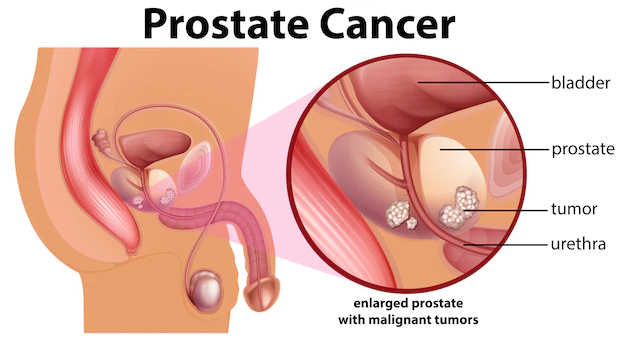
There’s no single success rate for robotic prostatectomy. The overall success depends on how far the cancer has spread (if it has metastasized), whether you have urinary control after surgery, and whether the surgery has affected your sexual function.
What Is the Success Rate of Robotic Prostatectomy?
A prostate cancer diagnosis can be overwhelming, but it’s also one of the treatable forms of cancer. A new technology that’s been gaining immense popularity in prostate cancer treatment is robotic prostatectomy.
It’s a minimally invasive surgical procedure in which a uro-oncologist in Navi Mumbai guides robotic arms to perform the surgery without making a large abdominal incision. A common question people ask is: What’s the success rate of robotic prostatectomy? Is it any different from the traditional approach?
Understanding Robotic Prostatectomy
Robotic prostatectomy is a surgery to remove your prostate gland using a robotic system. Nearby lymph nodes may also be removed depending on the extent of the disease. Note that robotic prostatectomy doesn’t mean the machine operates.
The surgeon is still in full control and uses a 3D, magnified view to control the robotic arm. This allows greater precision during surgery. Since it involves small incisions, the surgery results in less post-operative pain, a low risk of complications, and less blood loss.
What’s the Success Rate of Robotic Prostatectomy
Robotic prostatectomy in Navi Mumbai has a high success rate, especially when the cancer is detected at an early stage and hasn’t spread to the surrounding parts.
However, there isn’t a single success rate that could apply to all patients. Here’s what doctors consider when determining the treatment’s success:
Cancer Control
How well the cancer is removed and whether it’s completely gone, as well as whether there’s a chance of recurrence. The main goal of robotic prostatectomy is to eliminate cancer by removing the prostate, which can be very well achieved if the cancer is localized, i.e., it hasn’t spread beyond the prostate.
Even then, recurrence is possible if any cancer cells remain. One way to detect recurrence is by testing prostate-specific antigen (PSA). When the prostate is removed, the PSA level must be undetectable or fall extremely low. If it starts rising again, a follow-up diagnosis may be needed, as rising PSA suggests recurring prostate cancer.
Urinary Function
Does the patient have full control over urination? Since the prostate is located close to the urinary tract, many patients experience temporary issues with bladder control and urine leakage.
This is common within the first few weeks after catheter removal. These often resolve with time, and many patients regain their full bladder control within 1-2 years.
Sexual Function
Can the patient get and keep an erection and can they have a normal sex life after surgery? The prostate gland is also surrounded by nerves and blood vessels associated with your ability to get an erection.
So, an important factor your surgeon may check when evaluating the success rate is how the surgery has affected your sexual function.
Nerve-sparing prostate removal is a modern advancement in robotic prostatectomy where nerves connected to erection are spared without compromising the prostate removal. This can help preserve your erectile function, although erectile recovery can take longer, sometimes more time than urinary recovery.