The urethra is a thin tube through which the urine stored in the bladder leaves the body. It also carries semen in men. Urethral stricture occurs when an injured urethra continues to heal with scar tissue, which causes the narrowing of this tube.
The result is a weak urine stream or difficulty emptying the bladder fully. The severity of the disease depends on how tight the urethra has become. The good news is that urethral stricture treatment in Navi Mumbai is often effective in restoring your urine flow and managing the urinary symptoms.
Symptoms of Urethral Stricture
Most people with urethral stricture experience these symptoms:
- A weak urine stream
- Straining to start urination
- Sitting on the toilet longer than usual to empty the bladder completely
- A feeling that your bladder is still full after using the restroom
- Waking up frequently at night to urinate
- Recurrent UTIs
- Blood in the urine
Severe urethral stricture, where the urethra is blocked completely, is a medical emergency. It can cause acute urinary retention, where you may not be able to pass urine at all. This can lead to urine collecting in the bladder, increasing the risk of bladder damage, kidney damage, and a UTI.
Treatment Options for Urethral Stricture
Common treatment options for urethral stricture include:
Urethral Dilation
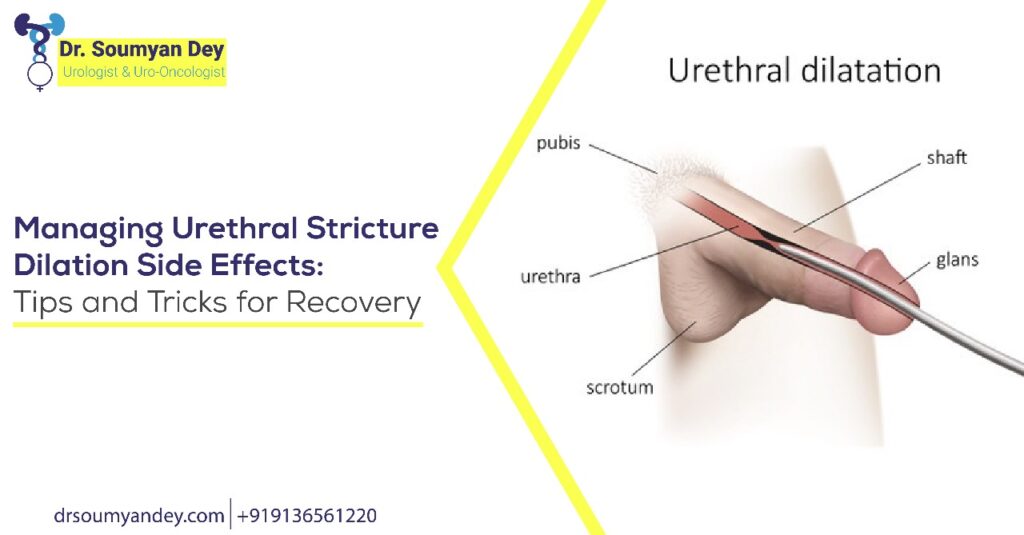
Performed under general or local anesthesia, urethral dilation widens the urethra with specialized instruments to let urine flow freely. For mild narrowing, dilation can be an effective treatment option, but it can’t guarantee that the stricture won’t return. That’s because it only widens the tube but can’t treat the underlying scar tissue.
Direct Visual Internal Urethrotomy (DVIU)
This is another minimally invasive procedure in which a cystoscope is passed through the urethral opening. A scalpel is then used to cut away the scar tissue, thus widening the restricted tube and allowing smooth urine flow. Just like urethral dilation, it doesn’t address the underlying problem.
Urethroplasty
Urethroplasty is a surgical repair or reconstruction of the narrowed portion of the urethra. It involves removing the stricture and reconnecting the healthy ends of the urethral tissue. Sometimes, the graft may be used for reconstruction.
The surgery is comparatively more complex than simple dilation or internal urethrotomy. You may need a urinary catheter after the procedure to allow the repaired area to heal completely.
Experts recommend urethroplasty as a long-term solution to urethral stricture rather than repeating urethral dilation and DVIU for recurring stricture. It may also be used as first-line treatment for severe strictures that are 2 cm or longer.
Can Urethral Stricture Recur After Treatment?
Yes, urethral stricture can return. The rate of recurrence depends on previous treatments, current treatment, the cause of stricture formation, and the length of the stricture. This is why regular follow-ups are needed even if you have noticed significant improvement in urination symptoms.