
Urological cancer - Dr.Dey
Dr. Soumyan Dey
Urologist & Uro-Oncologist

Dr.Dey

Urological cancer

Other Ancillary Treatment (except antibiotics) for UTI in Men

Urinary Tract Infections occur when the bacteria (mostly E.coli) travel through the urethra and up toward the bladder. It can be painful and cause many uncomfortable symptoms, like a burning sensation accompanied by a frequent and uncontrollable urge to urinate. Although women are at an increased risk due to the shorter length of their urethra, men can also contract this bacterial infection.  Antibiotics are often the most effective treatment course for bacterial infections, but several ancillary treatments for UTI in males are also available. Note that these may not always be effective, especially in severe cases where the bacteria have spread through the ureters and begun to multiply in the kidneys. Ancillary Treatments and Preventive Measures Certain preventive measures can help reduce the recurrence risk of UTIs in men. They can complement medical treatment and make your recovery smoother. Here is what you can do to lower your risk of getting UTI. Hydration A simple yet effective step for reducing the risk of UTI or preventing it from getting worse is hydration. Ideally, you must drink 2 liters of fluids per day, unless a urologist in Vashi, Navi Mumbai, recommends otherwise due to other medical conditions. Water eliminates bacteria from your urinary tract, preventing them from growing.  Urination Frequency Holding the urine gives bacteria more time to thrive and multiply. To prevent them from sticking to the urinary tract, you must empty your bladder when needed. This can make the occurrence of UTI less likely. Cranberry Products There’s a strong belief that cranberry supplements can prevent UTI. It’s a good source of proanthocyanidins (PACs) (a compound that helps prevent the E.coli bacteria from sticking to your urinary tract). That said, the scientific research on this topic is limited. Besides, cranberry supplements alone cannot fight UTI. They might help prevent the recurrence. Probiotics Probiotics, whether you take them in a supplement form or through foods, such as yogurt, can help with UTIs. These are known for improving the balance of the gut bacteria, promoting overall immunity, and improving gut health. They can also lower the chances of E.coli and other UTI-causing bacteria thriving in the bladder. D-Mannose This natural sugar, found in fruits such as cranberries, has shown promising results in preventing the recurrence of UTI in men and women. In fact, research shows that it can be used for the treatment of uncomplicated UTI. It creates a non-stick surface around the urinary tract, which prevents bacteria from sticking. Heating Pad Using a warm compress for gentle massaging can relieve discomfort caused by an active urinary tract infection. It can reduce cramps and make recovery more comfortable. However, heating pads are never a substitute for antibiotics or other treatments for UTI.  Conclusion Ancillary treatments are not a substitute for antibiotics and may not be effective in treating an active UTI in men. It’s important to control the infection with antibiotics so it doesn’t spread to the kidneys and become severe.

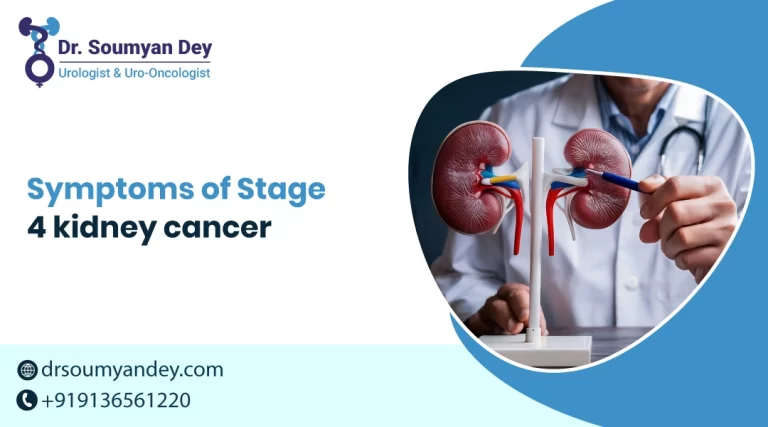
Symptoms-of-Stage-4-kidney-cancer

Stage 4 Kidney Cancer: Symptoms, Treatment, and Life Expectancy

The number of kidney cancer patients has been increasing every year. One of the reasons is the prevalence of the CT scan, which detects kidney cancer at an early stage. Kidney cancer treatment in Vashi, Navi Mumbai, is highly effective for early-stage cancers. The treatment becomes more complicated when the cancer has reached an advanced stage. Here’s more about stage IV kidney cancer, symptoms, and treatment options. What is Stage 4 Kidney Cancer? The kidney, a bean-shaped organ, filters your blood, removes excess fluid from the body, and produces urine. When cells in your kidneys start growing uncontrollably, they form a cancerous tumor within the kidney. The cancer is classified into four stages, in which, the cancerous cells stay confined to the kidneys in the early stage and might spread outside kidneys in the later stages. The fourth stage is considered the most advanced. It occurs when the cells from the tumor break through the fatty tissue surrounding the kidneys and invade other nearby organs, such as the adrenal glands and lymph nodes. Where Does Kidney Cancer Spread? Stage 4 kidney cancer cells can reach different parts of your body through the lymphatic system and bloodstream and might form tumors there. The most common sites that the cancer might invade include: The lymphatic system, which destroys bacteria, viruses, and cancer cells, might become a site for these abnormal cells to thrive and spread throughout the body. Stage 4 Kidney Cancer Symptoms Like other cancer types, kidney cancer may not cause noticeable symptoms in its early stages. Here are some hallmark signs of kidney cancer in the later stages: Secondary tumors might cause additional symptoms, depending on where the cancer has spread and the organs it has invaded. The symptoms include: Treatment for Stage 4 Kidney Cancer For stage 4 kidney cancer, the treatment may involve surgical removal of the diseased portion of the kidney or the entire kidney with lymph nodes and affected nearby tissues. Immunotherapy can help improve your immune system’s ability to fight cancer cells and offer relief.  In most cases, a combination of treatments, such as targeted therapy, immunotherapy, and radiation therapy, is used for treatment. Metastatic kidney cancer is difficult to treat, which is why many patients focus on palliative treatment that helps with pain management and improving their quality of life. Life Expectancy in Stage 4 Kidney Cancer According to the American Cancer Society, in patients with stage 4 kidney cancer, the 5-year survival rate is 18% while the same rates for localized and regional cancers are 93% and 75% respectively. That said, these are only the average numbers. The survival rate can vary depending on your overall health and how your body responds to treatment. To learn more, consult the best urologist in Vashi, Navi Mumbai.

Is-Nephrectomy-the-Best-Treatment-for-Renal-Cell-Carcinoma

Is Nephrectomy the Best Treatment for Renal Cell Carcinoma?

Renal cell carcinoma affects hundreds of thousands of people worldwide. Kidney cancer sounds intimidating. However, cutting-edge technology has made many advanced treatment options possible for those diagnosed with this malignant cancer.  A common question that people ask is whether nephrectomy surgery is their only hope. Or, is it the best kidney cancer treatment in Vashi, Navi Mumbai? The answer depends on the type of cancer, how far it’s spread, the size of the tumor, and your health. Let’s learn more about it. Causes of Renal Cell Carcinoma RCC starts in the tubules that filter blood and produce urine. Although the exact causes are unknown, certain risk factors that are believed to contribute to an increased risk of RCC include: Symptoms of RCC are often not obvious in the early stages. It may be detected accidentally during routine check-ups or imaging tests. Symptoms might show up later, i.e., when the disease has progressed.  Symptoms usually depend on the parts of the body the cancer has affected. Patients report blood in the urine, weight loss, fatigue, pain in the back, and an unusual mass in the abdomen. Nephrectomy for Renal Cell Carcinoma Nephrectomy is a surgery to remove the diseased kidney (sometimes, a part of it) to get rid of cancer. Your surgeon might recommend: Partial Nephrectomy If the cancer affects only a small portion of the kidney, the oncologist might remove the diseased part, leaving the healthy kidney tissues intact. Choose the best urologist in Vashi, Navi Mumbai, if you want to preserve your kidney function with partial nephrectomy. Radical Nephrectomy Radical nephrectomy removes the entire kidney and is the most preferred choice for patients with a large tumor, a tumor located in the center of the kidney, or when the cancer cells have metastasized to the lymph nodes and the surrounding structures. Depending on the stage of the RCC, the entire kidney, including lymph nodes, adrenal gland, and surrounding tissues, is removed. If the cancer is localized (i.e., it hasn’t invaded the nearby tissues or organs), surgery may be the most effective treatment plan. However, nephrectomy alone may not always be a practical option. For example, people with advanced-stage RCC may require targeted therapy, immunotherapy, or a mix of both for the best results. If the patient’s kidneys aren’t healthy or functioning properly, removing them may worsen their condition. In such cases, cryotherapy or radiofrequency ablation (RFA) can help destroy the cancer. Chemotherapy is not used as a primary treatment for kidney cancer, as kidney tumors are resistant to chemotherapy drugs, making it less effective than other treatment options, like immunotherapy. Conclusion  While nephrectomy is used as the first line of treatment for most renal cell carcinoma cases, surgery alone may not be effective if the cancer has metastasized. That said, there’s no one-size-fits-all treatment for kidney cancer. Some patients may find relief from a combination of treatment options, while others may experience improvement with surgery alone.

How Fast Does Kidney Cancer Spread

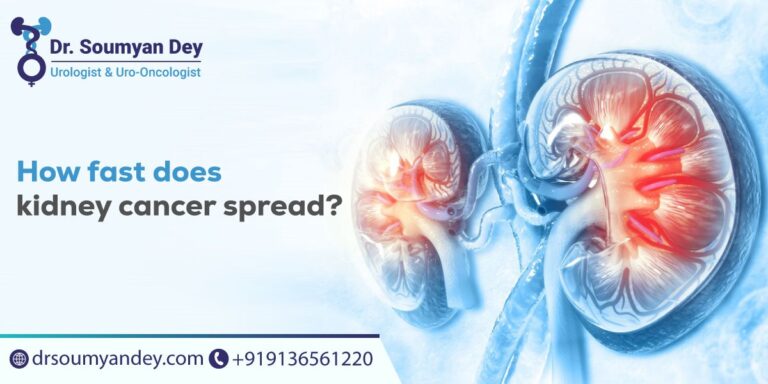
How Fast Does the Kidney Cancer Spreads?

Cancers that start in the kidneys are classified as kidney cancers. Renal cell carcinoma (RCC) occurs in most kidney cancer cases, with other less common types being Wilms tumor and transitional cell carcinoma. A common question that a kidney cancer specialist in Navi Mumbai is often asked is, “How fast does kidney cancer spread?”  As with other types of malignancies, cancer starting in the kidneys is treatable when diagnosed at an early stage (when it hasn’t spread to the nearby organs and tissues). Let’s understand the factors affecting the speed at which kidney cancer spreads. Cancer Stages Over 90% of kidney cancers are RCC, which has three subtypes: clear cell, papillary, and chromophobe. Of these, clear cell renal cell carcinoma (RCC) is more likely to travel through the bloodstream to different parts of the body. Cancer’s stage tells how far the cancer has spread and helps determine a patient’s prognosis. Let’s understand the different stages of kidney cancer: Cancer can develop over time or occur rapidly. How fast it grows or spreads depends on the type of cancer, its stage, aggressiveness, and other medical factors. Let’s explore each in brief. Key Influencing Factors Tumor Type: Kidney cancers have different growth rates based on their type. Some low-grade cancers grow slowly and are less likely to metastasize, while high-grade cancer, such as clear cell RCC, which is also the most common kidney cancer, can spread fast. Other subtypes occur in fewer people and are less likely to metastasize.  Lymph/blood System Involvement: Cancer cells that have penetrated the lymph nodes or blood vessel walls are more likely to metastasize, as they can travel to distant parts of your body through the bloodstream.  Genetics and Overall Health: Certain gene mutations can also affect cancer growth. Moreover, your overall health and immunity can impact the growth of cancer. People with good immunity respond better to the treatment. Smoking, obesity, and high blood pressure can result in fast-growing kidney cancer. Where It Spreads Kidney cancers can spread to the lungs, liver, lymph nodes, adrenal glands, bones, skin, and in some cases, brain. The location where the cancer spreads can vary from person to person. Once it’s spread, it’s harder to treat. That’s why seeking kidney cancer treatment in Navi Mumbai in the early stages can help improve the outcome of your treatment. Detection & Treatment CT scans, ultrasounds, and MRIs are a few imaging tests that can detect tumors. Biopsies are a highly reliable way to confirm the presence of cancerous cells. If it’s caught in the early stages, partial or total nephrectomy (kidney removal) surgery might be recommended. For more aggressive cancers, targeted therapy and immunotherapy are used. Chemotherapy and radiation are not used as a treatment for kidney cancer, as RCC is resistant to chemodrugs.

Symptoms for Urological Cancer

Exploring the Alarming Warning Signs & Symptoms for Urological Cancer

Urological cancer is a collective medical term for all types of cancers that begin in the male and female urinary system or the male reproductive system. The most commonly affected areas include the bladder, kidneys, ureters, testes (in men), prostate, and urethra.  While the symptoms of urological cancers may vary depending on the affected organs, they all require early detection and prompt medical attention for a better chance of recovery. Common Symptoms of Urological Cancer Here’s what most people with urological cancer are likely to notice. Some people with urological cancer are asymptomatic, while others experience severe symptoms. Blood in the Urine Also called hematuria, blood in the urine is often considered an early sign of bladder cancer. In some cases, the urine turns pink or red with visible blood drops. In others, the blood may be too little in amount to be seen without a microscope. People with hematuria usually do not consider it a major issue because it happens occasionally, and it may not cause any pain. While blood in the urine may not always indicate a serious medical issue, it’s always best to have yourself checked. Painless Lump In men, testicular cancer can lead to a painless lump with a visible swelling in one or both testes. The scrotum might feel heavier. In some cases, the lump occurs with pain. It’s important to notice changes in your testicular appearance and see a professional if you notice anything unusual. This cancer can grow quickly and aggressively.  Unexplained Weight Loss If you have been losing weight without trying, it could be an early sign of cancer. If unexplained weight loss is accompanied by urological issues, like inability to pass urine, an urge to urinate often, or pain and burning sensation while urinating, it’s best to get checked for urological. Less Common Symptoms Fatigue Your body tends to burn energy faster when it’s fighting off a disease. As a result, you are likely to feel tired and extremely weak. If you feel unusually tired or notice anything off about your energy levels, it’s time to see a healthcare expert. Lower Back Pain A most notable sign of kidney cancer is pain in the lower back, just beneath the ribs. Sadly, the pain only crops up when the tumor has grown bigger. You could have dull or sharp pain. There’s no way to know whether the pain in the back is associated with other non-critical issues or a chronic disease, which is why it’s best to see a urologist to rule out urological cancer as a potential cause.  Recurrent UTIs Frequent episodes of urinary tract infections can signal an underlying issue, possibly a urological cancer. Although UTIS can occur due to poor hygiene, low immunity, and other factors, if you have been getting them frequently, it’s best to consult with a doctor. Depending on the type and aggressiveness of the cancer, a urologist may recommend a combination of treatment plans that help slow its progress and kill the cancer cells before they reach an advanced stage.

Scroll to Top
📞