Dr.Dey

surgery

Single-Incision Laparoscopic

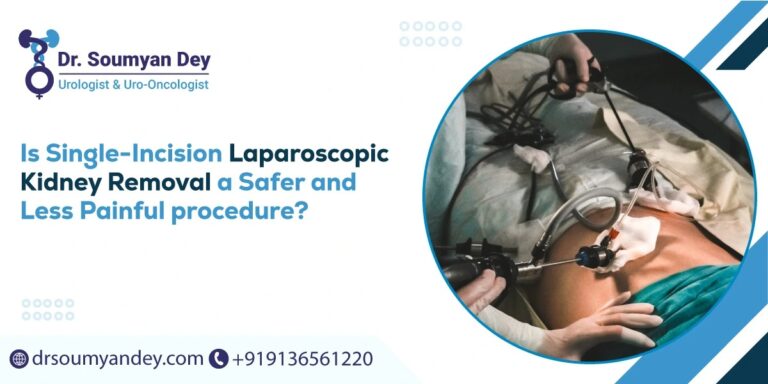
Is Single-Incision Laparoscopic Kidney Removal a Safer and Less Painful Procedure?

Laparoscopic surgery has evolved. This minimally invasive approach has been chosen by most patients who are advised to undergo a kidney removal surgery in Vashi, Navi Mumbai. The minimal scarring, less post-operative pain, and fewer incisions are some key benefits of the approach.  A recent advancement in the technique is the single-incision laparoscopy for nephrectomy. Instead of making multiple incisions on your abdomen, the surgeon creates only a single small incision around the belly button, making the surgery safer, less painful, and easier on your body. Here’s all you should know about it. When is Single-Incision Laparoscopic Kidney Removal Recommended? Here’s when single-incision laparoscopic kidney removal is needed. Kidney Cancer: Surgery is needed if you are diagnosed with kidney cancer. The exact treatment plan depends on how fast the cancer spreads or the level of damage it has caused. If it’s an initial-stage cancer, the entire kidney might be removed with laparoscopic surgery to reduce the risk of the cancer spreading. Non-functioning Kidney: If one of your kidneys doesn’t function optimally, is infected, or has congenital defects, removing it with nephrectomy surgery can be an ideal decision.  Donor Nephrectomy: People who donate their kidneys can also undergo single-incision nephrectomy to ensure better post-operative outcomes, lesser pain, and no major scars.  What are the Benefits A urologist in Vashi, Navi Mumbai, can remove your kidney through SILS. You might wonder how it is different from open surgery or typical multiple-incision laparoscopic nephrectomy. Here is how it’s a better alternative to other nephrectomy procedures: Minimal Scarring: The biggest advantage of SILS is minimal scarring. The incision length is 2-4 cm and is either in the navel or close to it. If you are concerned about a 10-12 cm long scar from an open surgery or multiple small scars in a laparoscopic procedure, this could be your best option.  Reduced Pain: A single, small scar means less post-operative pain. Your surgeon doesn’t have to make big cuts on the muscles and tissues, which reduces the pain levels significantly. As a result, you don’t have to take stronger pain medications. This also means you can walk, move, laugh, and transition to your pre-surgery life quickly. Quicker Recovery: You can also resume your routine tasks sooner and get back to work faster compared to the longer recovery periods of traditional open surgery. You can expect a discharge in 1-2 days and can perform light activities in a week (if your doctor clears you for it). Full recovery can be expected in 4-6 weeks. Reduced Risk of Complications: In SILS, there’s only one entry point. Fewer incisions mean a lower risk of infection, bleeding, or hernias. Besides, a single incision makes wound care easier for the patient.SILS is a modern, innovative surgical approach for nephrectomy. It’s ideal for people donating their kidneys or needing to detach them due to medical reasons. The success rate of the procedure depends on many factors, such as the surgeon’s expertise and your health, but overall, it’s a highly preferred and smart alternative to traditional nephrectomy procedures.

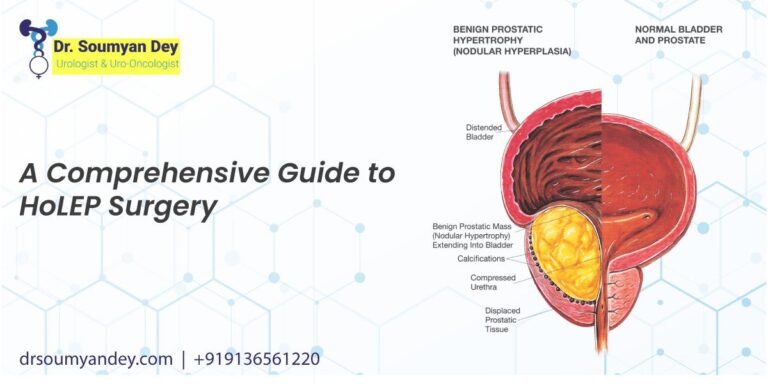
A Comprehensive Guide to HoLEP Surgery

A Comprehensive Guide to HoLEP Surgery

Holmium Laser Prostate is a non-invasive treatment for enlarged prostate. The benign prostatic hyperplasia (BPH) or enlarged prostate is a medical condition that develops in men as they age. It increases the frequency of urination or a sudden urge to pee. As your prostate grows in size, the excess tissue can obstruct your urine flow. HoLEP surgery treats that without involving any incision or invasive procedure. Keep reading to learn more about urologist in Vashi, Navi Mumbai will leave it in place and remove it a week later. You are advised to drink enough fluids after the catheter removal. Conclusion Developed in the 90s, HoLEP is a minimally invasive procedure that removes the bulky tissues, which block urine flow. The prostate is a small gland surrounding your urethra. This blocks the urine and sperm from flowing outside your body. HoLEP can treat BPH without any invasive procedure.

Prostate Cancer Surgery In Navi Mumbai

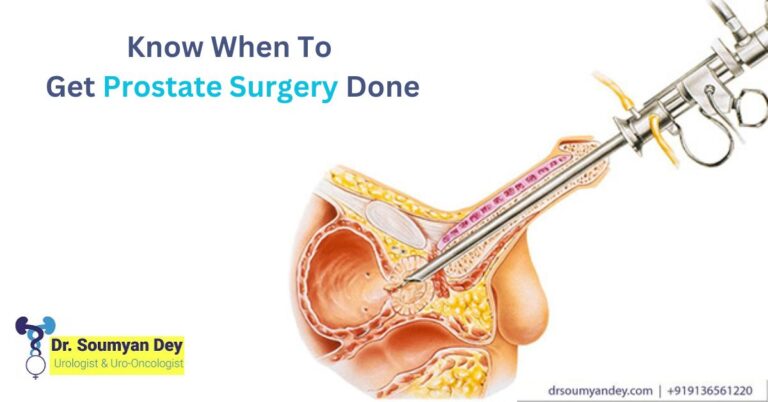
Know When To Get Prostate Surgery Done

The prostate is a small gland located between the bladder and penis in men. It plays a role in producing semen and is susceptible to changes as men age. With increasing age, hormonal changes and cell growth can cause the prostate to enlarge, a condition known as benign prostatic hyperplasia (BPH). A study states, \”By age 60, half of all men will have an enlarged prostate, and by age 85, the proportion reaches 90%.\” An enlarged prostate can increase the risk of kidney problems or repeated urinary tract infections. If you have an enlarged prostate that causes certain medical conditions and other treatments don\’t provide enough relief, you should get enlarged prostate surgery in Navi Mumbai.    Conditions that require prostate surgery  If you have any of these medical problems, you should consider getting enlarged prostate treatment in Vashi, including: Prostate cancer is the most common cancer diagnosed in men. In most cases, it is a slow-growing cancer, but it can spread to other body parts if it is not treated. Some common symptoms of prostate cancer include frequent urination, weak urine flow, erectile dysfunction, bone pain, and pelvic discomfort. Doctors recommend prostate surgery to treat prostate cancer. Prostatitis is an inflammation of the prostate gland. A bacterial infection, a virus, or an autoimmune disorder may cause it. Prostatitis can cause a variety of symptoms in a person, including pain, difficulty urinating, and blood in the urine. Doctors sometimes use prostate surgery to treat prostatitis, but it is usually not the first line of treatment. BPH is a common condition in older men that causes noncancerous prostate gland enlargement. It can cause various symptoms, including difficulty urinating, frequent urination, and a weak urine stream. Your healthcare provider may suggest TURP, laser ablation techniques, or prostate artery embolization (PAE) to treat BPH. Check more about Blood In Urine: What Does it Mean? A prostate abscess is a collection of pus in the prostate gland. It is a rare condition, but it can be serious. Prostate abscesses are usually treated with antibiotics and surgery. It typically requires drainage to remove the infection and relieve symptoms. Surgical procedures, such as transrectal or transperineal drainage, may be necessary to address the abscess. Moreover, doctors may use prostate surgery to treat prostate abscesses if other treatments, like antibiotics, are unsuccessful.  This condition causes narrowing of the urethra, the tube that carries urine from the bladder to the outside of the body. Doctors may use prostate surgery to treat urethral stricture if other treatments, like medication or balloon dilation, are ineffective. Conclusion : If you want an enlarged prostate treatment clinic in Navi Mumbai, consider visiting Dr. Soumyan Dey. He is a leading urologist and uro-oncologist with 12 years of experience. Dr. Dey believes that surgery should only be used when necessary. He uses minimally invasive surgical techniques whenever possible, which can help to reduce recovery time and pain. Also Read : How is Prostate Cancer Diagnosed?

Scroll to Top