Dr.Dey

RIRS Surgery

When Is RIRS Recommended Over Other Procedures

When Is RIRS Recommended Over Other Procedures?

Retrograde Intrarenal Surgery, short for RIRS, is a low-risk, minimally invasive surgery for kidney stones. There are no cuts or stitches. The best urologist in Vashi, Navi Mumbai, uses an endoscope, a special thin instrument for the procedure.  The endoscope passes through your urinary tract, i.e., your urethra and the bladder, to reach your kidney. The urologist uses laser energy to break stones. It’s an ideal medical treatment for patients whose bodies can’t handle an invasive, open surgery. Indications for RIRS RIRS is recommended when you have: Smaller Stones: If you have a small kidney stone, less than 2 cm in size, you may be a good candidate for RIRS. That said, the procedure is also used if the stones are larger and have not responded to extracorporeal shock wave lithotripsy.  Hard-to-Reach Areas: Stones located in locations that are difficult to access through other procedures can be broken down into small fragments with an endoscope. The tool offers excellent flexibility and manoeuvrability, allowing your surgeon to access the stone and remove it easily. Patients Not Fit for Invasive Surgery: Elderly patients and others with a compromised immune system or medical issues, such as bleeding disorders or obesity, might want to consider this least invasive and safest approach for kidney stone removal. Procedure Details Here’s the step-by-step guide for RIRS: Step 1: You will be sedated throughout the surgery to ensure a completely painless procedure Step 2: An optic endoscope is inserted into the urethra and bladder. It’s then moved up toward the affected kidney. Step 3: Once the endoscope reaches its destination, the camera attached to its end is used to visualize stones. Step 4: The surgeon uses a laser to break the stone. Once it’s broken down, it can pass naturally over days or weeks. Step 5: A stent may or may not be placed (temporarily) to allow urine drainage. Advantages of RIRS Here are the reasons why RIRS surgery in Vashi, Navi Mumbai, is often a preferred choice of treatment for kidney stone removal. No Severe Trauma: RIRS is a minimally invasive surgery with no incisions or sutures. There’s no trauma to the blood vessels or nerves, making it safer and less painful than other surgical approaches. Shorter Hospital Stay: You can expect a discharge within 24 hours if your vitals are stable. Quick Recovery: You can resume your normal life within a few days to a week after RIRS. Less post-operative pain with no scars makes recovery easier and quicker compared to an open surgery. Post-operative Care It’s normal to have some discomfort in the abdomen or back after RIRS. Urinary symptoms, like blood in the urine and frequent trips to the restroom, are also common side effects of the treatment, but they usually resolve in a week. Your surgeon will prescribe painkillers and other over-the-counter medications to relieve pain and other symptoms.  Urinary urgency is especially common in patients who have a stent placed. This will be removed in 1-2 weeks. It’s advisable to drink enough water to ensure the smooth passing of the remaining fragments (if any) of the stone naturally. You must also avoid heavy lifting, physically demanding exercises, and sexual intercourse for a few weeks.

What to Expect After RIRS Surgery_ Common Side Effects and Recovery Tips

What to Expect After RIRS Surgery: Common Side Effects and Recovery Tips?

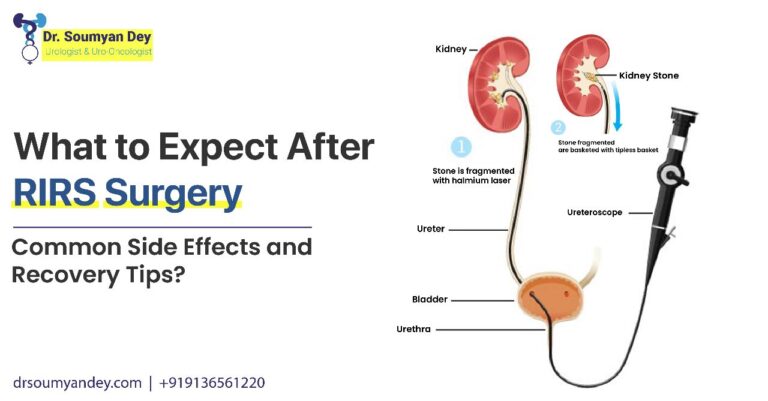
Retrograde Intrarenal Surgery or RIRS is a minimally invasive kidney stone removal procedure, in which a viewing tube, called a fiberoptic endoscope, is inserted into the ureter through the urethra. This tool is flexible enough to be bent and moved, allowing the RIRS surgery doctor in Navi Mumbai to move it into the ureter effortlessly. It’s a better and comparatively less invasive procedure than traditional kidney stone removal surgery. Keep reading to learn more about RIRS, when it’s performed, and some recovery tips. What is RIRS Surgery? RIRS is recommended for patients with kidney stones ranging from 10mm to 14mm in size. For those who experience recurring kidney stones or have huge stones that are too big to be removed with oral medication, the RIRS is an excellent choice. The endoscope gives a clear view of the urine-collection portion of the kidney and the number, as well as, the size of stones in it. The kidney stones are broken into tiny particles using the laser fiber, which is inserted into the ureter through the scope. Once done, these broken stone particles will be then removed through urine. The minimal risk of complications with no scarring and faster recovery make RIRS a suitable choice for those who don’t want to undergo traditional surgery. Since there’s no bleeding or the risk of harm to the surrounding organs, the recovery time for RIRS is relatively faster than the invasive kidney stone surgery. That said, it comes with a few risks you should discuss with your doctor. Also Read: Is Summer the Kidney Stone Season? Common Side Effects of RIRS Surgery RIRS doesn’t involve any incision, but the stent implantation through the urethra can cause mild discomfort post-procedure. Initially, you won’t feel anything due to the effect of local anesthesia, but once it wears off, you might experience pain or discomfort. To avoid pain while urinating, your healthcare provider will put a catheter, which is left for 24 hours. The side effects of RIRS surgery are less common and are seen in very few people after the operation. Here are a few of them: If you notice these symptoms post-surgery, visit the urology hospital in Navi Mumbai immediately. Tips for Recovering from RIRS Surgery You will be put in the monitoring room for the first few hours. Once the catheter is removed, you will get a discharge. You might notice blood in the urine and discomfort while sitting or walking. Avoid practicing any strenuous physical activity for the first few days and drink plenty of fluids. Eat a healthy and nutritious diet and avoid caffeinated beverages until you recover fully. Your doctor will prescribe antibiotics and painkillers to ease your symptoms. Conclusion Kidney stones that do not respond to lithotripsy and other non-invasive procedures might require an RIRS surgery, a minimally-invasive procedure, that removes the stones by breaking them into smaller pieces. These are then removed through urine. Complications from the procedure are less common, but it’s advisable to watch out for the signs of any unusual symptoms.

Scroll to Top