
nephrectomy procedure - Dr.Dey
Dr. Soumyan Dey
Urologist & Uro-Oncologist

Dr.Dey

nephrectomy procedure

Symptoms-of-Stage-4-kidney-cancer

Stage 4 Kidney Cancer: Symptoms, Treatment, and Life Expectancy

The number of kidney cancer patients has been increasing every year. One of the reasons is the prevalence of the CT scan, which detects kidney cancer at an early stage. Kidney cancer treatment in Vashi, Navi Mumbai, is highly effective for early-stage cancers. The treatment becomes more complicated when the cancer has reached an advanced stage. Here’s more about stage IV kidney cancer, symptoms, and treatment options. What is Stage 4 Kidney Cancer? The kidney, a bean-shaped organ, filters your blood, removes excess fluid from the body, and produces urine. When cells in your kidneys start growing uncontrollably, they form a cancerous tumor within the kidney. The cancer is classified into four stages, in which, the cancerous cells stay confined to the kidneys in the early stage and might spread outside kidneys in the later stages. The fourth stage is considered the most advanced. It occurs when the cells from the tumor break through the fatty tissue surrounding the kidneys and invade other nearby organs, such as the adrenal glands and lymph nodes. Where Does Kidney Cancer Spread? Stage 4 kidney cancer cells can reach different parts of your body through the lymphatic system and bloodstream and might form tumors there. The most common sites that the cancer might invade include: The lymphatic system, which destroys bacteria, viruses, and cancer cells, might become a site for these abnormal cells to thrive and spread throughout the body. Stage 4 Kidney Cancer Symptoms Like other cancer types, kidney cancer may not cause noticeable symptoms in its early stages. Here are some hallmark signs of kidney cancer in the later stages: Secondary tumors might cause additional symptoms, depending on where the cancer has spread and the organs it has invaded. The symptoms include: Treatment for Stage 4 Kidney Cancer For stage 4 kidney cancer, the treatment may involve surgical removal of the diseased portion of the kidney or the entire kidney with lymph nodes and affected nearby tissues. Immunotherapy can help improve your immune system’s ability to fight cancer cells and offer relief.  In most cases, a combination of treatments, such as targeted therapy, immunotherapy, and radiation therapy, is used for treatment. Metastatic kidney cancer is difficult to treat, which is why many patients focus on palliative treatment that helps with pain management and improving their quality of life. Life Expectancy in Stage 4 Kidney Cancer According to the American Cancer Society, in patients with stage 4 kidney cancer, the 5-year survival rate is 18% while the same rates for localized and regional cancers are 93% and 75% respectively. That said, these are only the average numbers. The survival rate can vary depending on your overall health and how your body responds to treatment. To learn more, consult the best urologist in Vashi, Navi Mumbai.

Is-Nephrectomy-the-Best-Treatment-for-Renal-Cell-Carcinoma

Is Nephrectomy the Best Treatment for Renal Cell Carcinoma?

Renal cell carcinoma affects hundreds of thousands of people worldwide. Kidney cancer sounds intimidating. However, cutting-edge technology has made many advanced treatment options possible for those diagnosed with this malignant cancer.  A common question that people ask is whether nephrectomy surgery is their only hope. Or, is it the best kidney cancer treatment in Vashi, Navi Mumbai? The answer depends on the type of cancer, how far it’s spread, the size of the tumor, and your health. Let’s learn more about it. Causes of Renal Cell Carcinoma RCC starts in the tubules that filter blood and produce urine. Although the exact causes are unknown, certain risk factors that are believed to contribute to an increased risk of RCC include: Symptoms of RCC are often not obvious in the early stages. It may be detected accidentally during routine check-ups or imaging tests. Symptoms might show up later, i.e., when the disease has progressed.  Symptoms usually depend on the parts of the body the cancer has affected. Patients report blood in the urine, weight loss, fatigue, pain in the back, and an unusual mass in the abdomen. Nephrectomy for Renal Cell Carcinoma Nephrectomy is a surgery to remove the diseased kidney (sometimes, a part of it) to get rid of cancer. Your surgeon might recommend: Partial Nephrectomy If the cancer affects only a small portion of the kidney, the oncologist might remove the diseased part, leaving the healthy kidney tissues intact. Choose the best urologist in Vashi, Navi Mumbai, if you want to preserve your kidney function with partial nephrectomy. Radical Nephrectomy Radical nephrectomy removes the entire kidney and is the most preferred choice for patients with a large tumor, a tumor located in the center of the kidney, or when the cancer cells have metastasized to the lymph nodes and the surrounding structures. Depending on the stage of the RCC, the entire kidney, including lymph nodes, adrenal gland, and surrounding tissues, is removed. If the cancer is localized (i.e., it hasn’t invaded the nearby tissues or organs), surgery may be the most effective treatment plan. However, nephrectomy alone may not always be a practical option. For example, people with advanced-stage RCC may require targeted therapy, immunotherapy, or a mix of both for the best results. If the patient’s kidneys aren’t healthy or functioning properly, removing them may worsen their condition. In such cases, cryotherapy or radiofrequency ablation (RFA) can help destroy the cancer. Chemotherapy is not used as a primary treatment for kidney cancer, as kidney tumors are resistant to chemotherapy drugs, making it less effective than other treatment options, like immunotherapy. Conclusion  While nephrectomy is used as the first line of treatment for most renal cell carcinoma cases, surgery alone may not be effective if the cancer has metastasized. That said, there’s no one-size-fits-all treatment for kidney cancer. Some patients may find relief from a combination of treatment options, while others may experience improvement with surgery alone.

Single-Incision Laparoscopic

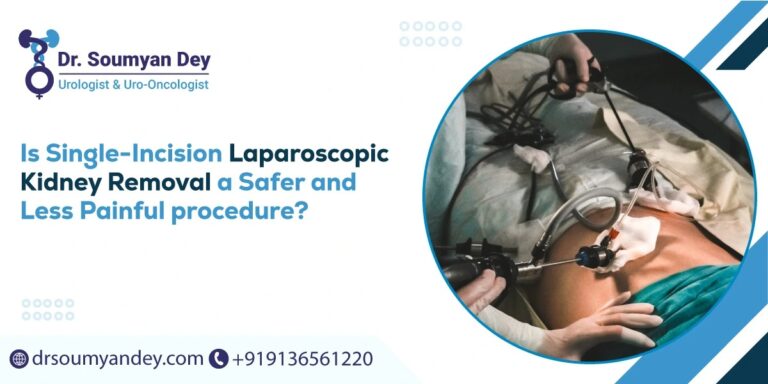
Is Single-Incision Laparoscopic Kidney Removal a Safer and Less Painful Procedure?

Laparoscopic surgery has evolved. This minimally invasive approach has been chosen by most patients who are advised to undergo a kidney removal surgery in Vashi, Navi Mumbai. The minimal scarring, less post-operative pain, and fewer incisions are some key benefits of the approach.  A recent advancement in the technique is the single-incision laparoscopy for nephrectomy. Instead of making multiple incisions on your abdomen, the surgeon creates only a single small incision around the belly button, making the surgery safer, less painful, and easier on your body. Here’s all you should know about it. When is Single-Incision Laparoscopic Kidney Removal Recommended? Here’s when single-incision laparoscopic kidney removal is needed. Kidney Cancer: Surgery is needed if you are diagnosed with kidney cancer. The exact treatment plan depends on how fast the cancer spreads or the level of damage it has caused. If it’s an initial-stage cancer, the entire kidney might be removed with laparoscopic surgery to reduce the risk of the cancer spreading. Non-functioning Kidney: If one of your kidneys doesn’t function optimally, is infected, or has congenital defects, removing it with nephrectomy surgery can be an ideal decision.  Donor Nephrectomy: People who donate their kidneys can also undergo single-incision nephrectomy to ensure better post-operative outcomes, lesser pain, and no major scars.  What are the Benefits A urologist in Vashi, Navi Mumbai, can remove your kidney through SILS. You might wonder how it is different from open surgery or typical multiple-incision laparoscopic nephrectomy. Here is how it’s a better alternative to other nephrectomy procedures: Minimal Scarring: The biggest advantage of SILS is minimal scarring. The incision length is 2-4 cm and is either in the navel or close to it. If you are concerned about a 10-12 cm long scar from an open surgery or multiple small scars in a laparoscopic procedure, this could be your best option.  Reduced Pain: A single, small scar means less post-operative pain. Your surgeon doesn’t have to make big cuts on the muscles and tissues, which reduces the pain levels significantly. As a result, you don’t have to take stronger pain medications. This also means you can walk, move, laugh, and transition to your pre-surgery life quickly. Quicker Recovery: You can also resume your routine tasks sooner and get back to work faster compared to the longer recovery periods of traditional open surgery. You can expect a discharge in 1-2 days and can perform light activities in a week (if your doctor clears you for it). Full recovery can be expected in 4-6 weeks. Reduced Risk of Complications: In SILS, there’s only one entry point. Fewer incisions mean a lower risk of infection, bleeding, or hernias. Besides, a single incision makes wound care easier for the patient.SILS is a modern, innovative surgical approach for nephrectomy. It’s ideal for people donating their kidneys or needing to detach them due to medical reasons. The success rate of the procedure depends on many factors, such as the surgeon’s expertise and your health, but overall, it’s a highly preferred and smart alternative to traditional nephrectomy procedures.

partial nephrectomy

How does Robotic-assisted Partial Nephrectomy Work?

Nephrectomy is a surgical procedure that’s usually performed in people with kidney cancer or a diseased kidney. It’s also performed to take the healthy kidney out for transplantation. The surgery can be performed as an open surgery or robot-assisted nephrectomy.  The latter is a more preferred, less-invasive, and an advanced surgical procedure. Whether you need robotic partial nephrectomy (removing a portion of the kidney) or complete kidney removal, it’s important to consult an experienced surgeon who’s familiar with robotic technology. Here’s all you should know about robot-assisted partial nephrectomy. What is Partial Nephrectomy? If only a portion of your kidney is damaged, your surgeon might recommend removing the diseased part while leaving the remaining healthy kidney intact. This preserves your kidney function and might eliminate the need for transplantation.  In a robot-assisted partial nephrectomy, a surgeon uses robotic arms to make precise cuts through small holes. The surgery results in lesser blood loss, lower risk of complications, and greater precision. This ensures faster recovery. When is Robot-Assisted Partial Nephrectomy Needed? Nephrectomy (whether partial or complete) is recommended when a patient is diagnosed with kidney cancer or has a non-cancerous mass that could be affecting their kidney function. If you have a kidney tumor less than 4 cm, you might be a good candidate for robot-assisted partial nephrectomy.  It’s also a highly recommended procedure for patients who want a less-invasive surgical procedure to remove part of the kidney. Patients with advanced-stage kidney cancer or other medical conditions might be unfit for the surgery. Advantages of Robot-Assisted Partial Nephrectomy Here are the benefits of robot-assisted partial nephrectomy: Better Precision Robotic tools offer better precision compared to humans. They offer a wider range of movements and can make precise cuts. This is particularly beneficial for patients opting for partial nephrectomy, as the robot’s precision ensures that only the damaged tissues are removed. Besides, the 3D view of the patients\’ internal organs makes the surgery more effective and easier for the surgeon. Faster Recovery The surgery involves fewer and smaller incisions than a traditional open nephrectomy, which means you can expect a quicker recovery. Compared to a 6-12-inch long incision in an open surgery, robot-assisted nephrectomy involves 2-3 tiny holes that are less than an inch long. It also makes an excellent choice for patients who do not want a large scar for cosmetic reasons Less Blood Loss Excessive blood loss during open surgery can lead to the requirement for blood transfusion and a slower recovery. With a robot-assisted procedure, the risk is significantly reduced. Smaller surgical holes with the robot’s precision prevent unnecessary damage to the blood vessels, leading to comparatively lesser blood loss than traditional surgery.  Lesser Pain Robot-assisted nephrectomy doesn’t cause severe tissue or nerve damage, which explains the lesser pain after the surgery. Unlike open surgery, you may not need to rely on heavy pain-killers in robot-assisted partial nephrectomy.See the best kidney cancer surgeon in Navi Mumbai to discuss the risks and benefits of robot-assisted nephrectomy. They will help you prepare for the procedure.

Scroll to Top
📞