Dr.Dey

Kidney cancer stages

Symptoms-of-Stage-4-kidney-cancer

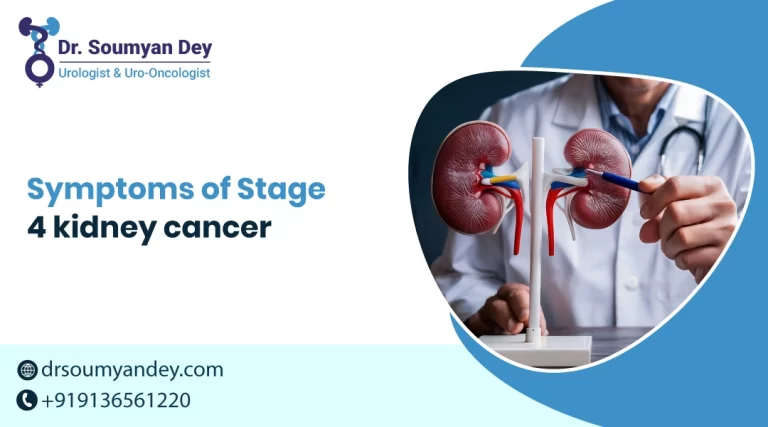
Stage 4 Kidney Cancer: Symptoms, Treatment, and Life Expectancy

The number of kidney cancer patients has been increasing every year. One of the reasons is the prevalence of the CT scan, which detects kidney cancer at an early stage. Kidney cancer treatment in Vashi, Navi Mumbai, is highly effective for early-stage cancers. The treatment becomes more complicated when the cancer has reached an advanced stage. Here’s more about stage IV kidney cancer, symptoms, and treatment options. What is Stage 4 Kidney Cancer? The kidney, a bean-shaped organ, filters your blood, removes excess fluid from the body, and produces urine. When cells in your kidneys start growing uncontrollably, they form a cancerous tumor within the kidney. The cancer is classified into four stages, in which, the cancerous cells stay confined to the kidneys in the early stage and might spread outside kidneys in the later stages. The fourth stage is considered the most advanced. It occurs when the cells from the tumor break through the fatty tissue surrounding the kidneys and invade other nearby organs, such as the adrenal glands and lymph nodes. Where Does Kidney Cancer Spread? Stage 4 kidney cancer cells can reach different parts of your body through the lymphatic system and bloodstream and might form tumors there. The most common sites that the cancer might invade include: The lymphatic system, which destroys bacteria, viruses, and cancer cells, might become a site for these abnormal cells to thrive and spread throughout the body. Stage 4 Kidney Cancer Symptoms Like other cancer types, kidney cancer may not cause noticeable symptoms in its early stages. Here are some hallmark signs of kidney cancer in the later stages: Secondary tumors might cause additional symptoms, depending on where the cancer has spread and the organs it has invaded. The symptoms include: Treatment for Stage 4 Kidney Cancer For stage 4 kidney cancer, the treatment may involve surgical removal of the diseased portion of the kidney or the entire kidney with lymph nodes and affected nearby tissues. Immunotherapy can help improve your immune system’s ability to fight cancer cells and offer relief.  In most cases, a combination of treatments, such as targeted therapy, immunotherapy, and radiation therapy, is used for treatment. Metastatic kidney cancer is difficult to treat, which is why many patients focus on palliative treatment that helps with pain management and improving their quality of life. Life Expectancy in Stage 4 Kidney Cancer According to the American Cancer Society, in patients with stage 4 kidney cancer, the 5-year survival rate is 18% while the same rates for localized and regional cancers are 93% and 75% respectively. That said, these are only the average numbers. The survival rate can vary depending on your overall health and how your body responds to treatment. To learn more, consult the best urologist in Vashi, Navi Mumbai.

Single-Incision Laparoscopic

Is Single-Incision Laparoscopic Kidney Removal a Safer and Less Painful Procedure?

Laparoscopic surgery has evolved. This minimally invasive approach has been chosen by most patients who are advised to undergo a kidney removal surgery in Vashi, Navi Mumbai. The minimal scarring, less post-operative pain, and fewer incisions are some key benefits of the approach.  A recent advancement in the technique is the single-incision laparoscopy for nephrectomy. Instead of making multiple incisions on your abdomen, the surgeon creates only a single small incision around the belly button, making the surgery safer, less painful, and easier on your body. Here’s all you should know about it. When is Single-Incision Laparoscopic Kidney Removal Recommended? Here’s when single-incision laparoscopic kidney removal is needed. Kidney Cancer: Surgery is needed if you are diagnosed with kidney cancer. The exact treatment plan depends on how fast the cancer spreads or the level of damage it has caused. If it’s an initial-stage cancer, the entire kidney might be removed with laparoscopic surgery to reduce the risk of the cancer spreading. Non-functioning Kidney: If one of your kidneys doesn’t function optimally, is infected, or has congenital defects, removing it with nephrectomy surgery can be an ideal decision.  Donor Nephrectomy: People who donate their kidneys can also undergo single-incision nephrectomy to ensure better post-operative outcomes, lesser pain, and no major scars.  What are the Benefits A urologist in Vashi, Navi Mumbai, can remove your kidney through SILS. You might wonder how it is different from open surgery or typical multiple-incision laparoscopic nephrectomy. Here is how it’s a better alternative to other nephrectomy procedures: Minimal Scarring: The biggest advantage of SILS is minimal scarring. The incision length is 2-4 cm and is either in the navel or close to it. If you are concerned about a 10-12 cm long scar from an open surgery or multiple small scars in a laparoscopic procedure, this could be your best option.  Reduced Pain: A single, small scar means less post-operative pain. Your surgeon doesn’t have to make big cuts on the muscles and tissues, which reduces the pain levels significantly. As a result, you don’t have to take stronger pain medications. This also means you can walk, move, laugh, and transition to your pre-surgery life quickly. Quicker Recovery: You can also resume your routine tasks sooner and get back to work faster compared to the longer recovery periods of traditional open surgery. You can expect a discharge in 1-2 days and can perform light activities in a week (if your doctor clears you for it). Full recovery can be expected in 4-6 weeks. Reduced Risk of Complications: In SILS, there’s only one entry point. Fewer incisions mean a lower risk of infection, bleeding, or hernias. Besides, a single incision makes wound care easier for the patient.SILS is a modern, innovative surgical approach for nephrectomy. It’s ideal for people donating their kidneys or needing to detach them due to medical reasons. The success rate of the procedure depends on many factors, such as the surgeon’s expertise and your health, but overall, it’s a highly preferred and smart alternative to traditional nephrectomy procedures.

How Fast Does Kidney Cancer Spread

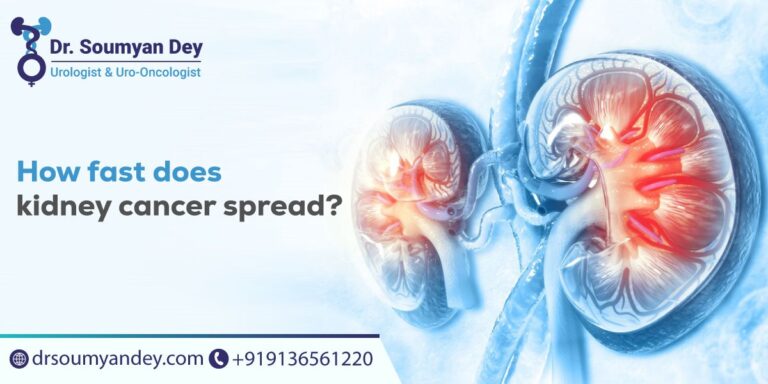
How Fast Does the Kidney Cancer Spreads?

Cancers that start in the kidneys are classified as kidney cancers. Renal cell carcinoma (RCC) occurs in most kidney cancer cases, with other less common types being Wilms tumor and transitional cell carcinoma. A common question that a kidney cancer specialist in Navi Mumbai is often asked is, “How fast does kidney cancer spread?”  As with other types of malignancies, cancer starting in the kidneys is treatable when diagnosed at an early stage (when it hasn’t spread to the nearby organs and tissues). Let’s understand the factors affecting the speed at which kidney cancer spreads. Cancer Stages Over 90% of kidney cancers are RCC, which has three subtypes: clear cell, papillary, and chromophobe. Of these, clear cell renal cell carcinoma (RCC) is more likely to travel through the bloodstream to different parts of the body. Cancer’s stage tells how far the cancer has spread and helps determine a patient’s prognosis. Let’s understand the different stages of kidney cancer: Cancer can develop over time or occur rapidly. How fast it grows or spreads depends on the type of cancer, its stage, aggressiveness, and other medical factors. Let’s explore each in brief. Key Influencing Factors Tumor Type: Kidney cancers have different growth rates based on their type. Some low-grade cancers grow slowly and are less likely to metastasize, while high-grade cancer, such as clear cell RCC, which is also the most common kidney cancer, can spread fast. Other subtypes occur in fewer people and are less likely to metastasize.  Lymph/blood System Involvement: Cancer cells that have penetrated the lymph nodes or blood vessel walls are more likely to metastasize, as they can travel to distant parts of your body through the bloodstream.  Genetics and Overall Health: Certain gene mutations can also affect cancer growth. Moreover, your overall health and immunity can impact the growth of cancer. People with good immunity respond better to the treatment. Smoking, obesity, and high blood pressure can result in fast-growing kidney cancer. Where It Spreads Kidney cancers can spread to the lungs, liver, lymph nodes, adrenal glands, bones, skin, and in some cases, brain. The location where the cancer spreads can vary from person to person. Once it’s spread, it’s harder to treat. That’s why seeking kidney cancer treatment in Navi Mumbai in the early stages can help improve the outcome of your treatment. Detection & Treatment CT scans, ultrasounds, and MRIs are a few imaging tests that can detect tumors. Biopsies are a highly reliable way to confirm the presence of cancerous cells. If it’s caught in the early stages, partial or total nephrectomy (kidney removal) surgery might be recommended. For more aggressive cancers, targeted therapy and immunotherapy are used. Chemotherapy and radiation are not used as a treatment for kidney cancer, as RCC is resistant to chemodrugs.

Scroll to Top