Dr.Dey

Benign Prostatic Hyperplasia BPH

Urinalysis in BPH Diagnosis

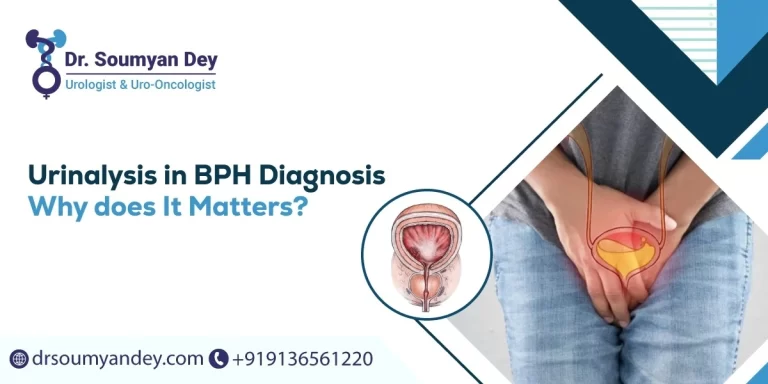
Urinalysis in BPH Diagnosis: Why Does It Matter?

Urinalysis in BPH Diagnosis: Why Does It Matter? Benign Prostatic Hyperplasia refers to the enlarged prostate in men. As men age, the prostate gland, which sits below the bladder, gets bigger. This causes uncomfortable urinary issues, like incomplete emptying of the bladder, weak stream, and frequent urge to urinate. If you experience any unusual urinary symptoms, a top urologist in Vashi, Navi Mumbai, can help diagnose the underlying cause.  Benign Prostatic Hyperplasia Diagnosis If you have BPH, early treatment can often improve your quality of life. Here\’s how it\’s diagnosed. Medical History This is often the initial step in diagnosing BPH. A healthcare expert will ask questions about urinary issues, such as how many times you wake up to urinate at night, whether you feel urgency, whether your bladder feels full even after using the toilet, and what your stream looks like. They may also ask about any medications you are currently on, if you have diabetes or any neurological disorders. Physical Examination It might sound a little complicated or painful, but a rectal exam is quick and often helpful in diagnosing BPH. This involves putting their fingers into your rectum to check for a larger prostate or any lumps inside it. Tests Used to Detect BPH If your doctor thinks you might have BPH, you may need more tests. To diagnose BPH in Vashi, Navi Mumbai, your doctor might run these tests: Urinalysis: You need to give a urine sample. The lab will check it to find signs of infection, glucose, blood, or protein. Symptoms of an enlarged prostate can seem similar to urinary tract infection symptoms. Sometimes, the symptoms can signal a more severe health issue, such as bladder stones or cancer. Urinalysis helps rule these out. PSA Blood: The Prostate gland produces a protein, the levels of which can rise slightly if you have a bigger prostate. However, if this protein content is found in a significantly high volume, it could indicate prostate cancer.  Uroflowmetry: Urine flow test measures your urine stream. Men with an enlarged prostate have a weaker stream.  Post-void Residual Volume Test: Men with BPH often report the feeling of incomplete emptying of the bladder. The post-void residual volume test detects the urine volume in your bladder after you\’ve peed. 24-Hour Voiding Diary: Your doctor may ask you to record the number of times you urinate over a 24-hour period. You must also record the volume.  Cystoscopy: This diagnostic tool involves inserting a thin, lighted tube through the urethra to examine the prostate, bladder, and surrounding structures clearly. This rules out strictures, tumors, and stones as the underlying causes of urinary symptoms. Ultrasound: It\’s an imaging test that detects the prostate\’s size and any swelling or abnormalities within it. Ultrasound can be transabdominal or transrectal (conducted through the rectum). Urodynamic and Pressure Flow Studies: The test involves passing a catheter through the urethra to the bladder. Water or air is used to measure the pressure in the bladder when you pass urine. BPH is a common concern in older men. Although many tests are available to get an accurate diagnosis, urinalysis is often used to rule out conditions that can mimic the symptoms of BPH.

Benign Prostatic Hyperplasia (BPH)

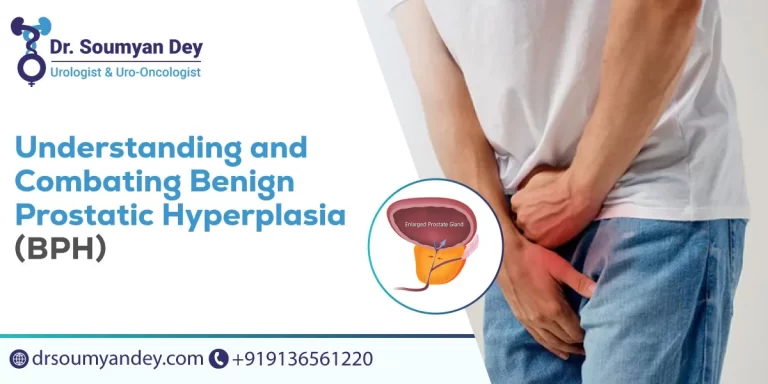
Understanding and Combating Benign Prostatic Hyperplasia (BPH)

With age, the prostate gland that sits right beneath the bladder tends to get bigger. Although it’s not a medical emergency, you may need benign prostatic hyperplasia treatment in Navi Mumbai to live a healthy and normal life. In this post, we’ll take a detailed look at BPH, its symptoms, risk factors, and treatment options. What is Benign Prostatic Hyperplasia (BPH) Your prostate produces semen. It’s located near the urethra. If it gets bigger, it might block your urethra, which might prevent you from urinating. The condition might affect a man’s urinary tract, causing a series of urinary issues, like difficulty peeing, a weak urine stream, frequent urination, and incontinence.  BPH usually develops in men above 55. Although it’s non-cancerous and doesn’t directly increase your risk of developing prostate cancer, the symptoms of prostate cancer can be mistaken for BPH, which is why thorough evaluation is always necessary. What Are the Warning Signs of Enlarged Prostate? The symptoms might get worse over time and can vary from patient to patient.  Here’s what people with enlarged prostate report: The size of the prostate doesn’t affect the severity of the symptoms. People with an extremely enlarged prostate might notice manageable symptoms or no symptoms at all, while those with a slightly enlarged prostate might have major symptoms. Common Risk Factors for BPH Although anyone can develop BPH, here are a few factors that increase your risk: Combating Benign Prostatic Hyperplasia Here’s what may help prevent BPH: Treatment for Benign Prostatic Hyperplasia Your doctor may recommend oral medication to shrink the prostate\’s size. Certain lifestyle changes, like a balanced diet and an active lifestyle, can manage your symptoms. For more severe cases, BPH surgery in Navi Mumbai might be necessary.  Transurethral resection of the prostate (TURP) is one of the commonly performed surgical procedures for an enlarged prostate. The surgery involves guiding a resectoscope through the urethra to remove prostate tissues. Transurethral Incision of the Prostate is another possible treatment, which enlarges the urethra to ensure uninterrupted urine flow. Conclusion Benign prostatic hyperplasia is a common issue in older men. Watchful waiting is usually recommended for patients who do not experience severe symptoms. If it’s affecting your quality of life, you may want to discuss suitable treatment options with your healthcare provider.

An Overview of Benign Prostatic Hyperplasia

An Overview of Benign Prostatic Hyperplasia

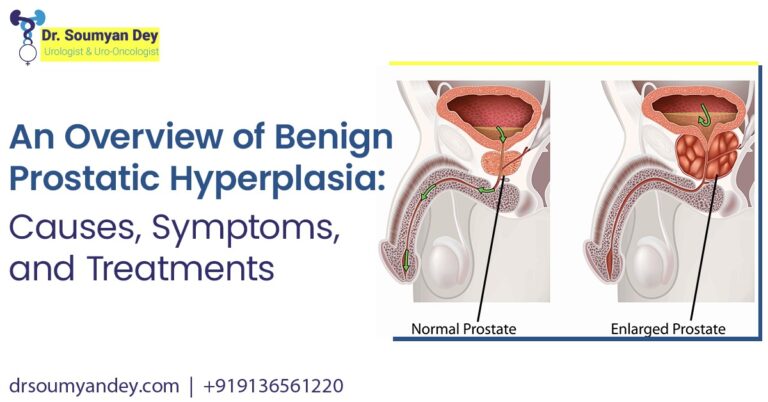
Benign Prostatic Hyperplasia is a medical condition in males where their prostate gets unusually enlarged as they age. The enlarged prostate can cause difficulty urinating or the frequent urge to urinate. It can also cause urinary and bladder problems in men. Fortunately, the BPH specialist in Navi Mumbai can help figure out the most suitable treatment for you. This may include medication, surgery, and a combination of both, depending on your age, prostate size, and other factors. What is Benign Prostatic Hyperplasia? The prostate sits right below your bladder and is responsible for producing semen. It’s a walnut size. However, if that grows, it might cause blockage around your urethra, making it harder to pass urine. Benign Prostatic Hyperplasia is not cancerous. However, it is associated with an increased risk of bladder and prostate cancer. Sometimes, patients might confuse the symptoms of prostate cancer with BPH. Causes of BPH One study shows that as men get older, the amount of testosterone their body produces declines significantly while the estrogen level remains unchanged. This hormonal change in your body can result in the prostate cells growing in size. However, that’s just one theory. The exact cause of BPH is not known. Symptoms of BPH Since the prostate is located beneath the bladder, it’s natural to have problems when urinating or passing ejaculation if you are diagnosed with BPH. Here are some common symptoms of BPH. Some uncommon symptoms of BPH include blood in urine and UTI. Also Read: A Comprehensive Guide to HoLEP Surgery Diagnosis of BPH Your urologist will ask about your medical history, the symptoms, and assess your risk factor. They will conduct a rectal examination to confirm the diagnosis. The doctor will carefully insert fingers into your rectum to feel the size, dimensions, and overall health of your prostate. They might also check for any hard growth, which could indicate cancer. If necessary, they might order a pee flow test to determine the pee stream, a test to know how much pee is left in the bladder after you are done urinating, and a cystoscopy. Treatment of BPH BPH treatment in Navi Mumbai includes medications for relaxing your prostate and alleviating your symptoms of urinary problems. Your healthcare provider might recommend medications to reduce the DHT production in your body, which stops prostate enlargement. It may take a month or two for your symptoms to improve after you have started medication. Surgical procedures, like widening your urethra to ensure proper urine flow or removing the prostate tissue manually, might be required to ease your symptoms. These are necessary if your enlarged prostate has blocked urine. TURP (Transurethral Resection of the Prostate) is the most common treatment for an enlarged prostate, but it might not be a good fit for older people (above 65 years). Prevention from BPH General lifestyle changes, like a healthy and balanced diet, regular exercising, and keeping your blood glucose and blood pressure in check, can help reduce the risk of an enlarged prostate. You can also take supplements but do not start them without your doctor’s prescription. Conclusion In conclusion, Benign Prostatic Hyperplasia (BPH) is a non-cancerous condition characterized by an enlarged prostate, primarily affecting aging males. While it can lead to urinary difficulties and discomfort, timely consultation with a BPH specialist in Navi Mumbai can provide effective treatment options, ranging from medications to surgical procedures. Understanding the symptoms, seeking a proper diagnosis, and adopting a healthy lifestyle can significantly contribute to managing and preventing the progression of this condition. Remember, it\’s crucial to consult with a urologist before making any significant changes to your treatment plan.

A Comprehensive Guide to HoLEP Surgery

A Comprehensive Guide to HoLEP Surgery

Holmium Laser Prostate is a non-invasive treatment for enlarged prostate. The benign prostatic hyperplasia (BPH) or enlarged prostate is a medical condition that develops in men as they age. It increases the frequency of urination or a sudden urge to pee. As your prostate grows in size, the excess tissue can obstruct your urine flow. HoLEP surgery treats that without involving any incision or invasive procedure. Keep reading to learn more about urologist in Vashi, Navi Mumbai will leave it in place and remove it a week later. You are advised to drink enough fluids after the catheter removal. Conclusion Developed in the 90s, HoLEP is a minimally invasive procedure that removes the bulky tissues, which block urine flow. The prostate is a small gland surrounding your urethra. This blocks the urine and sperm from flowing outside your body. HoLEP can treat BPH without any invasive procedure.

Scroll to Top